Features
Hyeres at Forty-One: The Fundamentals, Again
At the Villa Noailles, a festival that nearly lost its footing opens its 41st edition under new leadership, betting everything on ten young photographers and the people who might employ them.
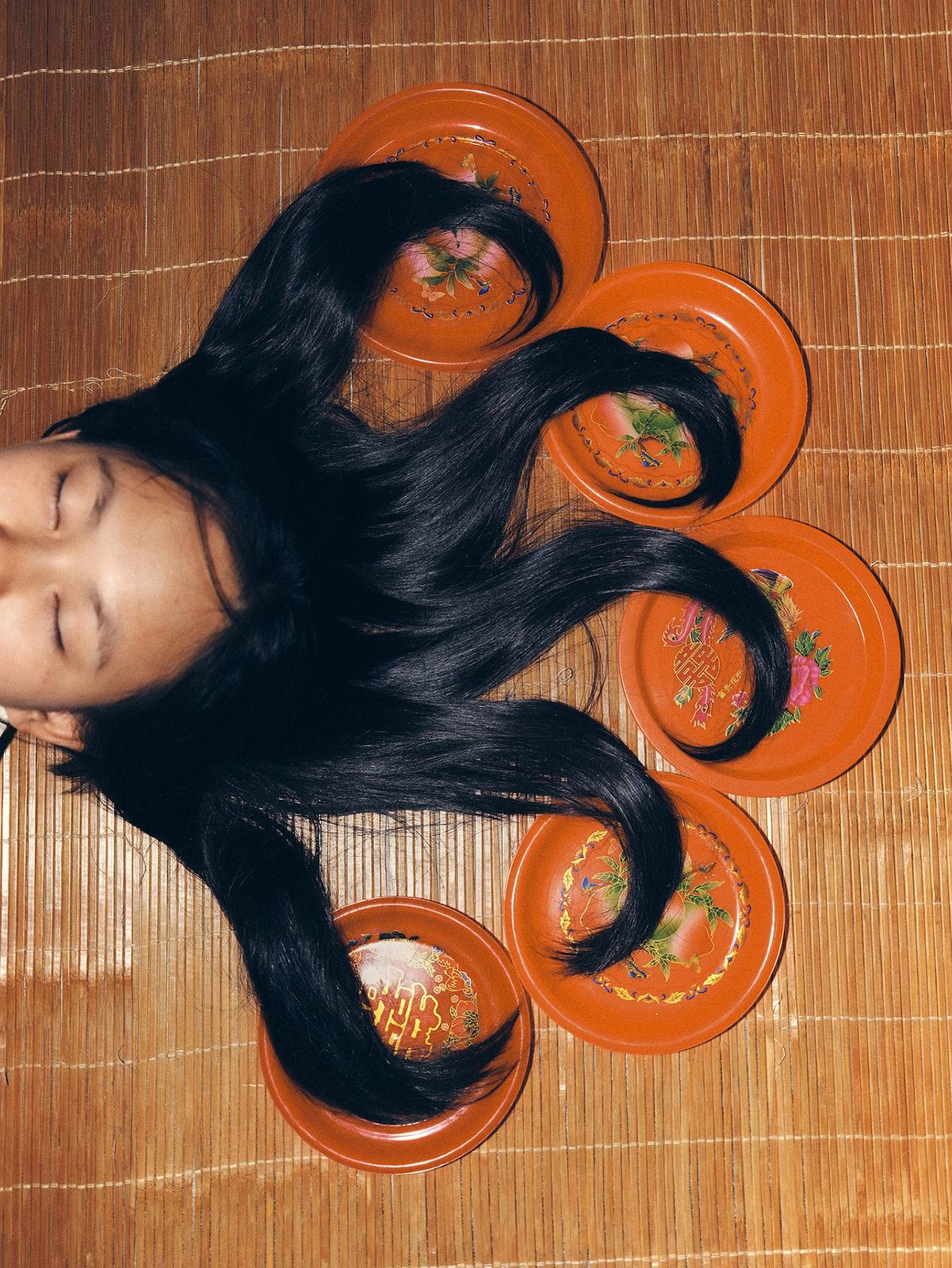
The hair does the styling. In Xueling Chen's photograph, a woman lies with her eyes closed on a woven mat while her long black hair is combed out in waves across five orange lacquered plates, each wave ending in a painted dish like a note held a beat too long. It is a fashion image with almost no fashion in it: no garment to sell, no logo to read, only patience, arrangement and a body willing to be composed. That is the kind of picture the Hyeres International Festival of Fashion, Photography and Accessories exists to find, and this week it is looking again.
The 41st Hyeres Festival runs at the Villa Noailles from 15 to 18 October 2026, with its exhibitions open to the public until 28 February 2027. The villa calls 2026 a new chapter in the festival's evolution, and the personnel support the claim. Hugo Lucchino leads the art centre as its new executive director, with Valerie Duport as its new president. Magalie Guerin leads the festival's artistic direction, working with Nataniel N.M. Robert on fashion, Rebecca Cuglietta on photography and Florence Tetier on accessories. Three women chair the three juries: Chemena Kamali, creative director of Chloe, for fashion; photographer Camille Vivier for photography; and Cecilie Bahnsen, founder of her own house, for accessories.
Guerin is careful about the language of renewal. She insists the festival is not turning a new page.
The fundamentals, in Hyeres terms, are specific. Ten photographers compete in the photography competition: Honglin Cai and Xueling Chen from China, Zacharie Lewertoff and Lorane Hochstatter from Switzerland, Julien Rahmani and Sidonie Ronfard from France, Giulia Frigieri from Italy, Yun Ki Ng from Hong Kong, Motoki Nakatani from Japan, and Valeria Sarto from Italy and the United States. The festival produces a group exhibition of their work, including a dozen prints per shortlisted artist, printed by Sheriff Projects and its laboratory. Vivier, who chairs their jury, won a prize at Hyeres herself in 1998, which gives the judging a useful circularity: the festival is being assessed, in part, by one of its own products.
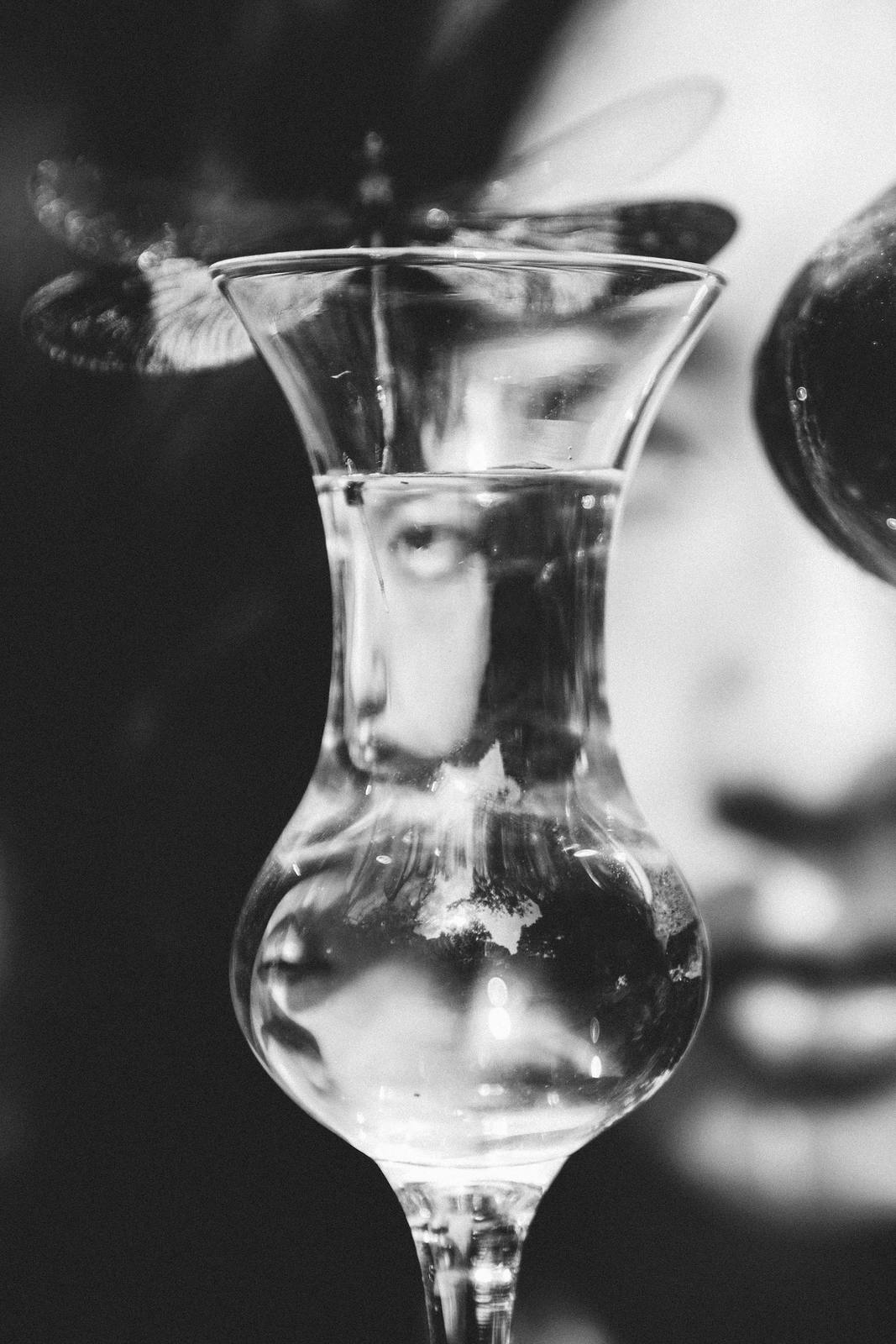
The range inside the ten is the argument. Yun Ki Ng's black and white photograph watches a face dissolve behind a glass vase and a dragonfly, the portrait refusing to sit still. Julien Rahmani's cricketer turns his back to the camera entirely, a white shirt with a name and the number 7 in green, his face wrapped in checked cloth against the sun. Neither picture behaves like a campaign image, and that is precisely their value here. The photography competition has always allowed its finalists to be only loosely affiliated with fashion, and previous winners have made work about protest, politics and male sexuality rather than garments. Hyeres rewards potential before it rewards polish.

The prizes are built to convert potential into a working life. The 7L Photography Grand Prize includes a book co-published by Editions 7L, Atelier EXB and the Villa Noailles, and an exhibition at 7L in Paris during Paris Photo. A new Pull&Bear Fashion Photography Prize, awarded this year for the first time, offers one finalist a grant of 20,000 euros and the production of a campaign or a commissioned photographic project, with a fanzine and a solo exhibition at the Villa Noailles to follow at the 2027 edition. The American Vintage Photography Prize is decided from a single print each candidate makes from a selection of the house's pieces. These are not trophies. They are introductions, printed matter and paid work, the three currencies a young photographer can actually spend.
The fashion competition runs on the same logic at larger scale. Its ten designers are Brais Albor Rodriguez, Sofia Castellon, Yui Chen, Lois Cousin, Rachel Luurssen, Jennifer Milleder, Farnia Salim, Dieter Vlasich Obermann, Matil Vanlint and Xiao Xu, and each finalist developed a collection with a craft house from le19M, Chanel's ecosystem of artisanal workshops. The accessories finalists compete under Bahnsen for a prize that funds a collaboration with the 19M houses. Around the competitions, the villa fills with fashion shows, workshops, roundtables and the exhibitions of the previous year's laureates, including 2025 photography laureate Gabriel Mrabi, whose Scenes of Clocks sets fifteen people and fifteen watches at a single hour inside the villa.
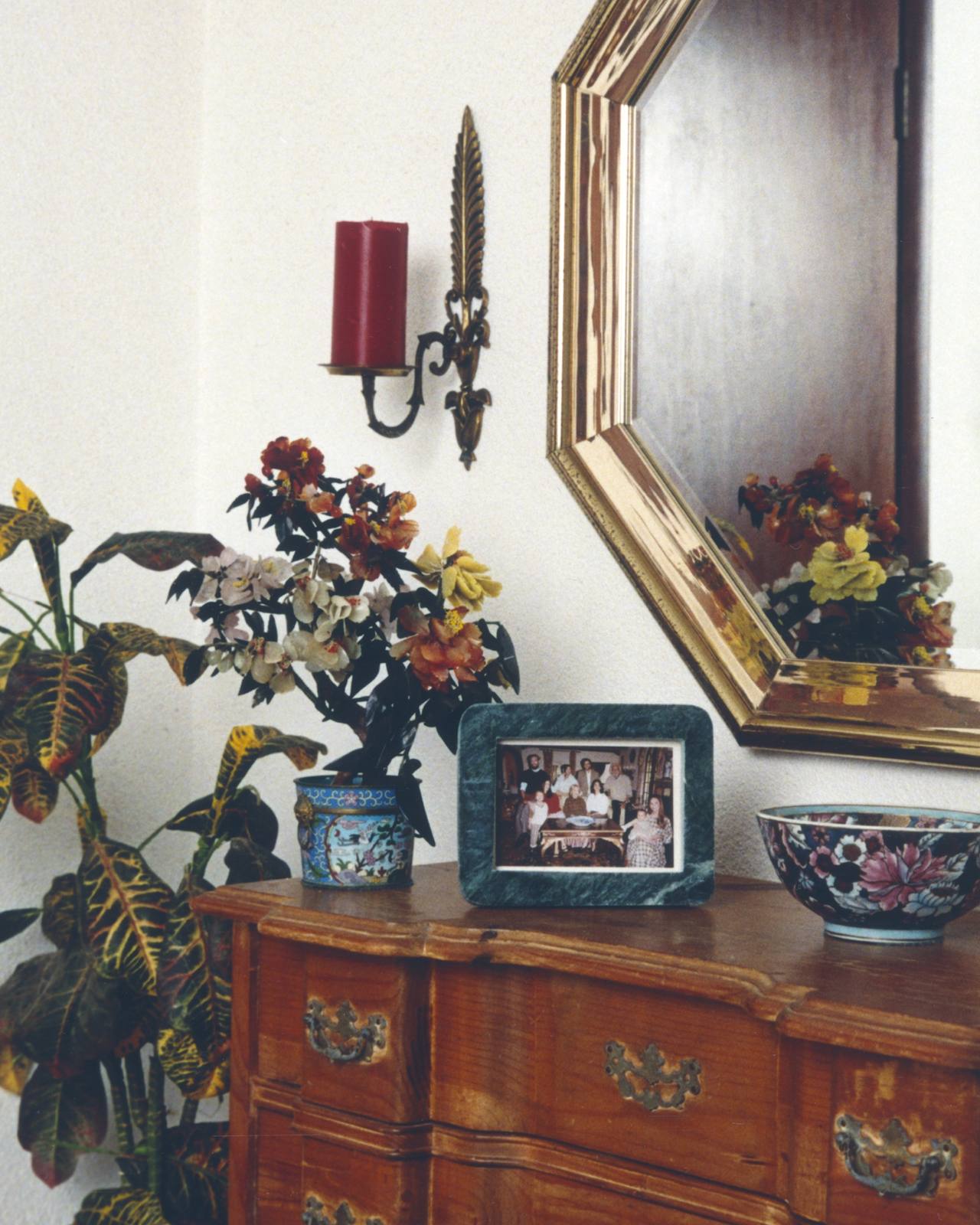
Valeria Sarto's photograph, a quiet interior where a framed family portrait sits on a wooden dresser between a flowering plant and a painted bowl, may be the most Hyeres image of the ten: domestic, deliberate and uninterested in spectacle. A festival in a modernist villa on a hill above the Mediterranean could easily become a backdrop in search of content. At forty-one, under new management and by its own account returning to its fundamentals, Hyeres is making the opposite claim: that the backdrop matters less than the dozen prints on the wall, and the conversations among the roughly two thousand accredited professionals the festival draws in front of them. The hair on the plates, arranged and held, is the method. Patience first. The career, if the festival does its job, follows.