Portraiture
Sanle Sory, in Colour at Last
At The Photographers' Gallery, the Burkinabe studio photographer's colour portraits, restored from his own negatives, refuse to stop history at independence and insist on what happened after.
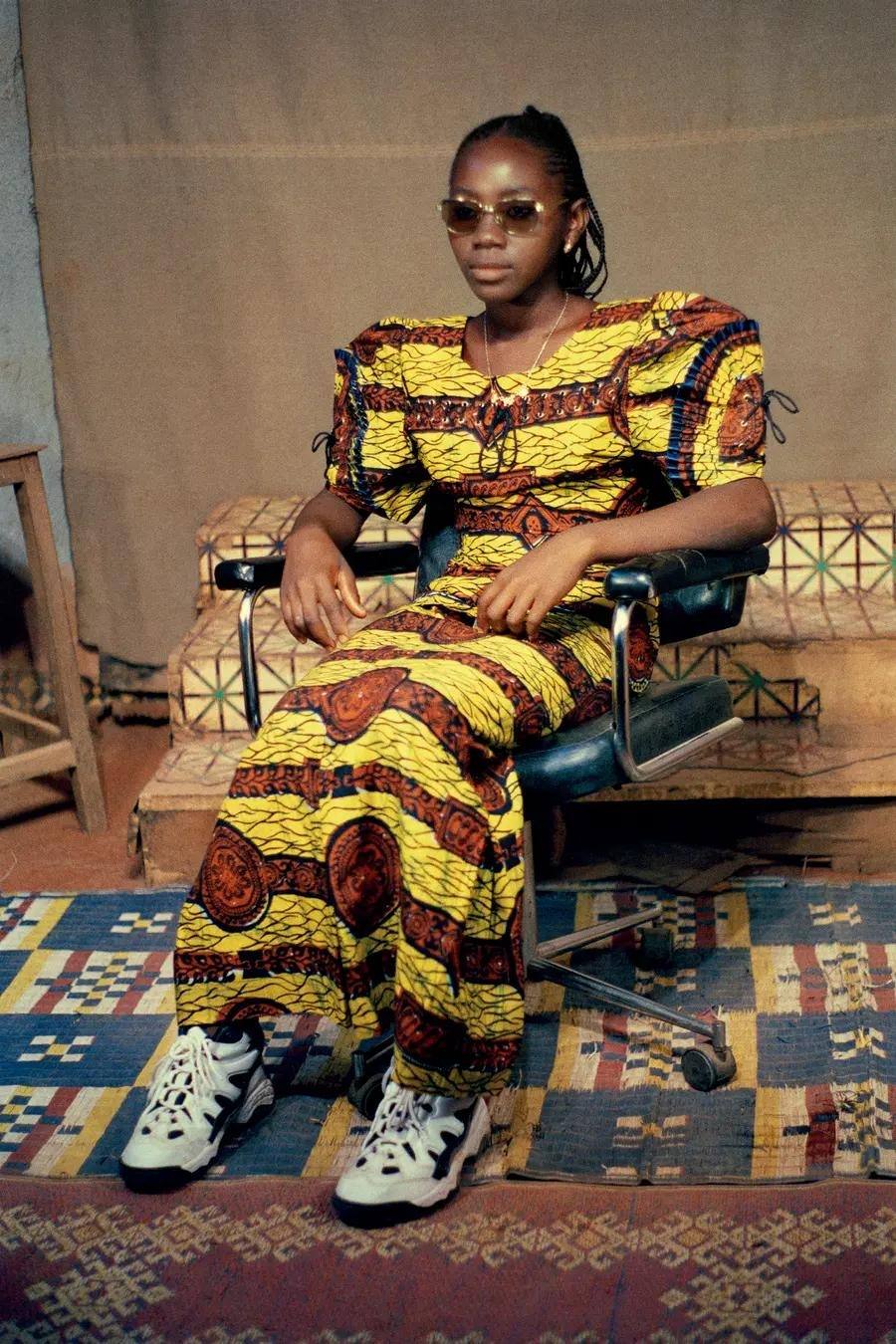
She has chosen everything. The yellow and rust patterned dress with the puffed sleeves, the sunglasses, the trainers in white and black worn under it all like a decision, the office chair she sits in sideways with one arm along its back: the portrait is a collaboration, and Sanle Sory's sitter is plainly a co-author. She is one of the colour portraits, most of them little seen until now, that fill Sanle Sory: Colour Years at The Photographers' Gallery in London, which opened on 14 October 2026 and runs to 21 February 2027.
Sory, born in Burkina Faso in 1943, is one of West Africa's most prolific photographers. The gallery estimates that he took a million portraits over six decades, a body of work that tracks the social and political changes of his country across that span. He fell in love with photography when he first posed for his own identity picture, served a three year apprenticeship, and opened the Volta Photo studio in Bobo-Dioulasso in 1960, the same year the country, then Upper Volta, was navigating independence. The studio mixed formal portraiture with reportage of the city's music, dance halls and youth culture, and it made his name first in black and white.
The black and white studio work of the 1960s and 1970s is the Sory the world learned: sharp suits, borrowed motorbikes, backdrops he commissioned from Ghanaian decorative painters, props the sitters were asked to bring. Colour Years is about the chapter after that fame. In the mid-1980s Sory began making colour portraits at Volta Photo, working in 24x36 film with Olympus and Konica cameras, and the exhibition prints, meticulously restored from the negatives in his archive, are shown alongside the Volta Jazz record covers that carry his portraits of the bands that flourished after independence.
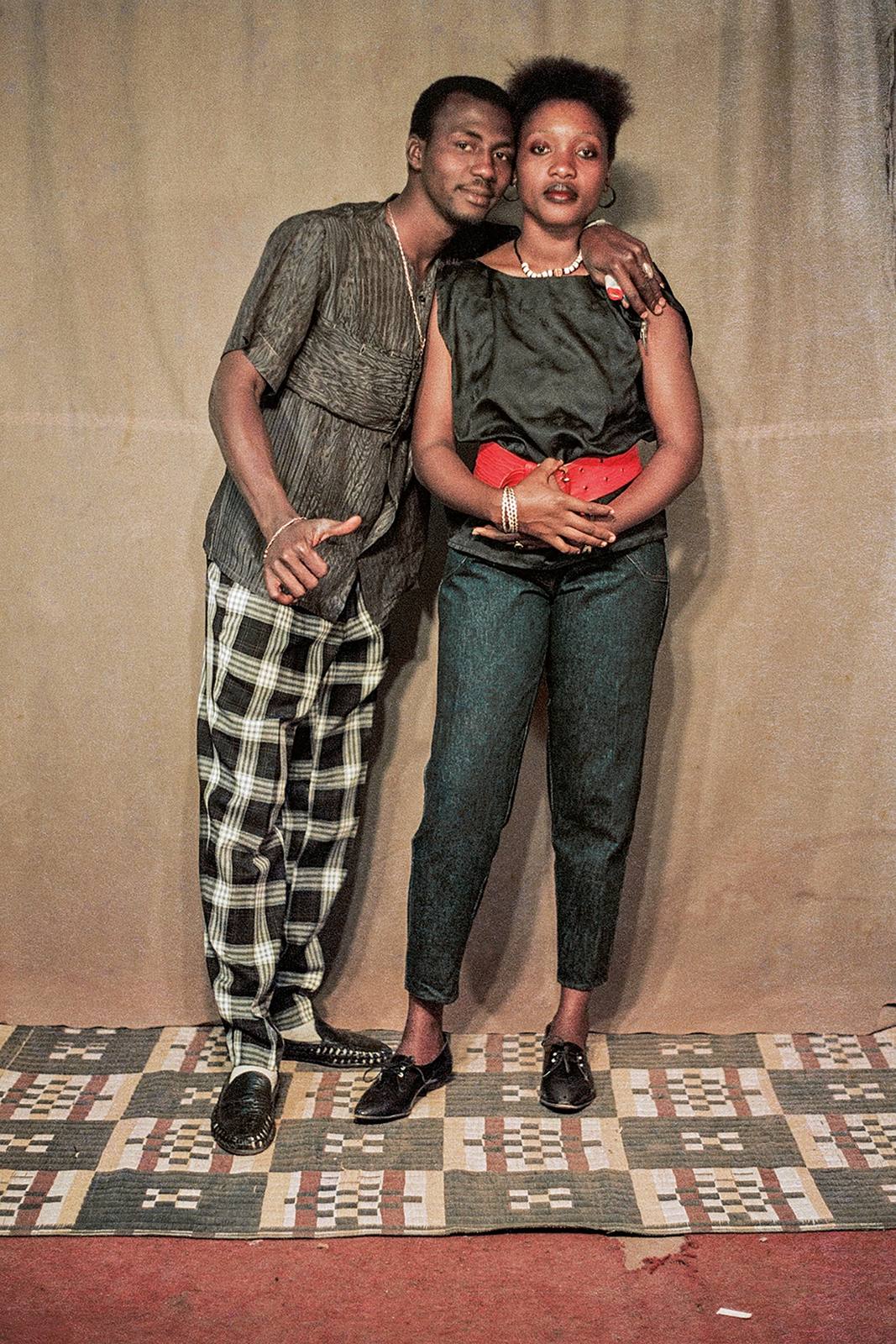
The couple standing on the patterned mat make the transition visible. He wears checked trousers and a hand on his hip's worth of confidence; she wears a black top, jeans and a wide red belt, her hands folded, her gaze level with the lens. Nothing in the frame is documentary in the passive sense. A studio portrait of this kind was a purchase, a commission, a small public announcement of who these two people intended to be, and colour raised both the price and the stakes. As the exhibition's curator, Taous Dahmani, notes, Sory printed in black and white, but when colour became more accessible his clients asked for it, it was more expensive, and he could no longer work alone. Sitter and printer become, in her reading, producer and collaborator together.
Dahmani is the reason the show exists in this form, and she says so without decoration. Asked why the gallery is showing Sory's later colour work now, her answer is direct: because she is here now. Her curatorial argument is that the later colour work holds a significant shift in what is known about the history of West African practice, and that the familiar story, which stops at the postcolonial moment of aspiration and joy in the 1960s and 1970s, refuses to ask what happened after. Colour is her starting point for asking.
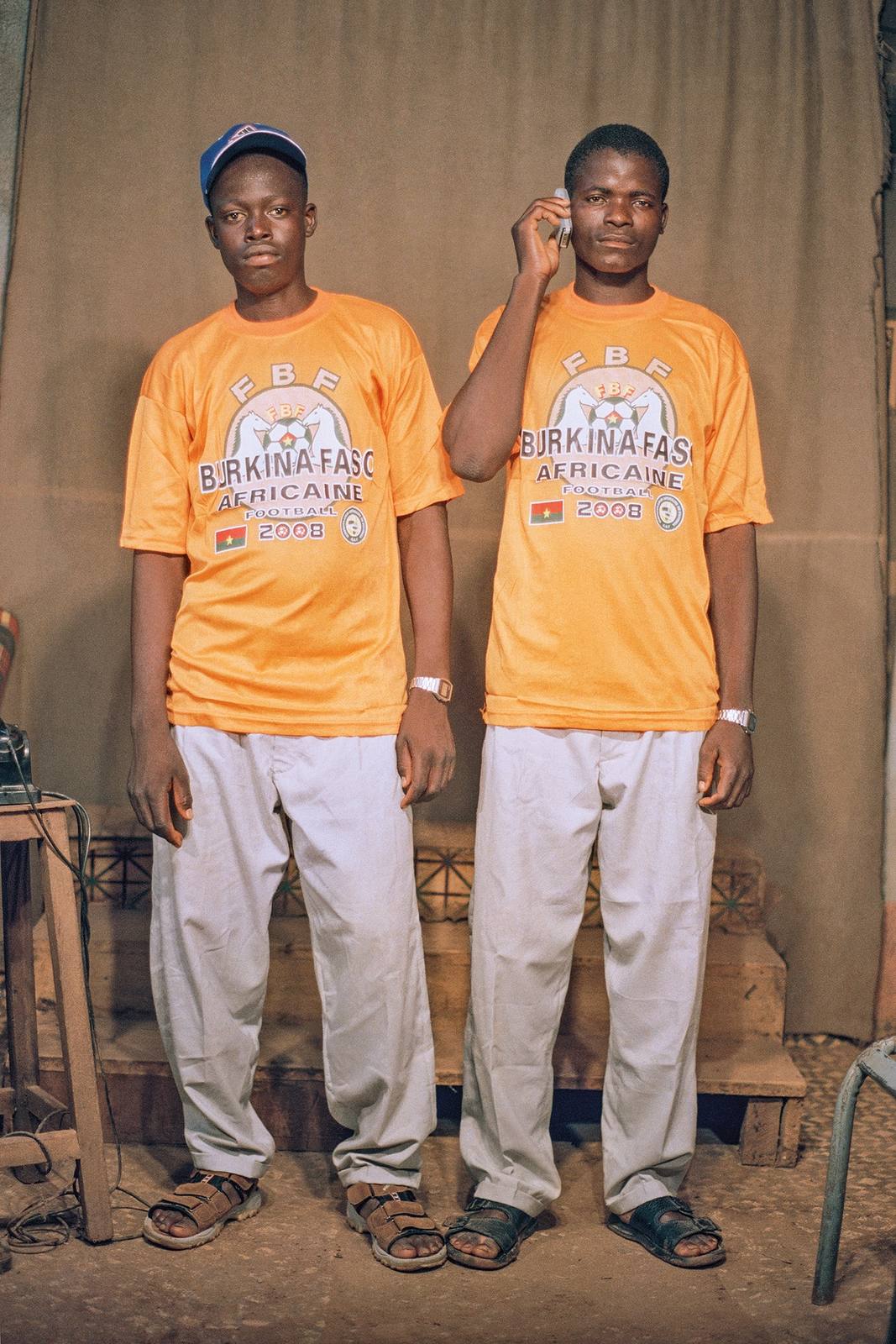
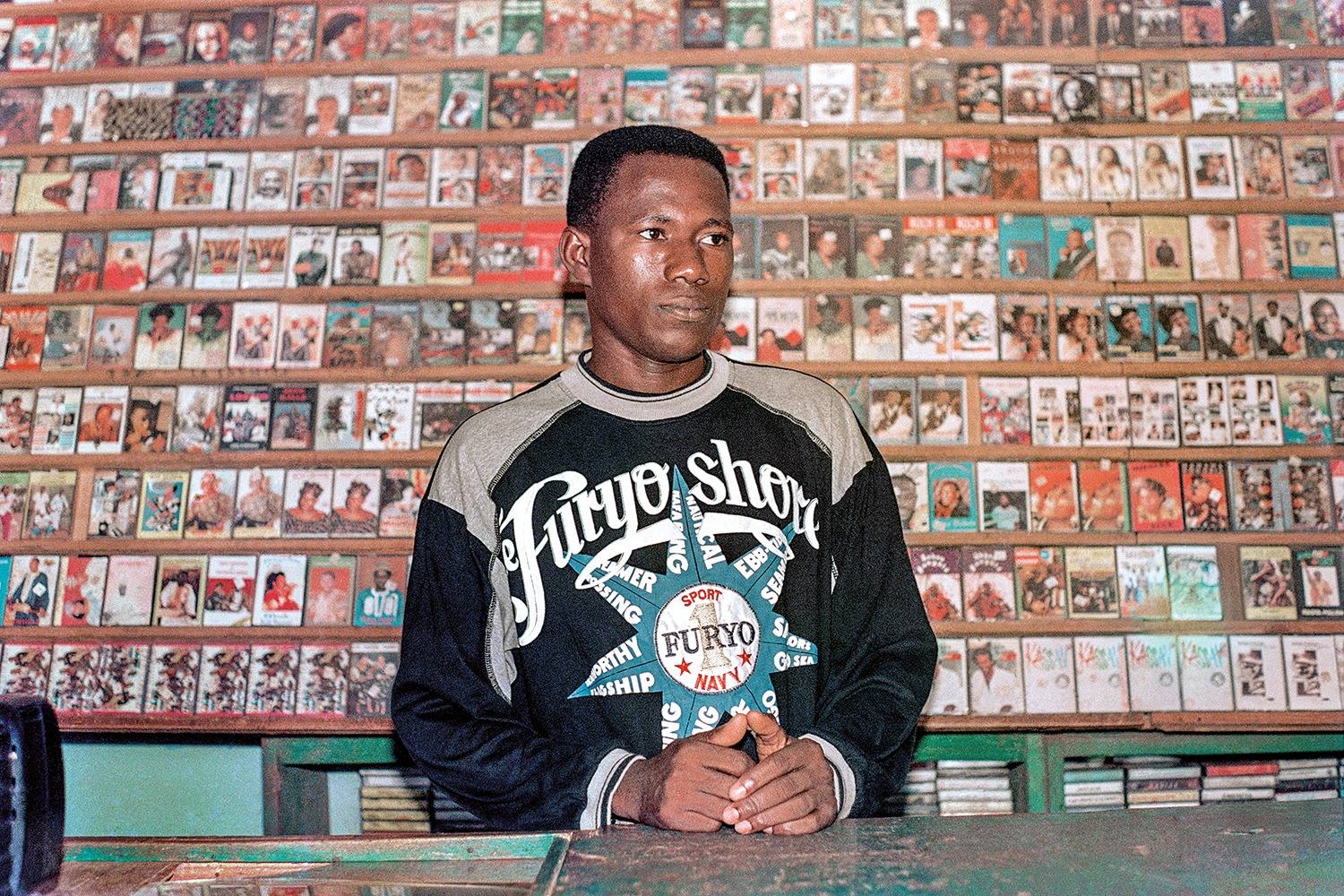
What happened after looks, in these frames, like two young men in matching orange Burkina Faso football shirts dated 2008, one of them holding a mobile phone to his ear in the middle of his own portrait, entirely unbothered. It looks like a trader standing behind his counter in front of a wall of cassette and video covers, hands folded, meeting the camera as an equal. The exhibition gathers families, couples and friends, identity photographs, and portraits of traders and shopkeepers in the local market, and its cumulative claim is modest and large at once: that a community in rapid change used a working photographer's studio to keep its own record, in colour, at its own expense, for its own walls.
Two books accompany the season, Sanle Sory, published by Phaidon, and Volta Colour, published by GOST, both appearing in October 2026. They are the right companions for a show that resists enlarging Sory into a monument. Dahmani's Sory is a master craftsman who was also, fundamentally, doing a job: negotiating with sitters, following fashion, keeping up as backdrops fell out of favour and clients asked to be seen inside a new technology. The colour portraits honour that reality better than the heroic black and white canon did. They are small, intimate, paid for, and exact, and they let Burkina Faso after independence be what it actually was: not an ending, but a place where people kept dressing up, kept dancing, and kept walking into a studio in Bobo-Dioulasso to say so.