Craft
Light and Magic: When Photography Insisted on Being Art
At Tate Modern, the first major global survey of pictorialism argues that the camera's artistic ambitions were never a purely Western story.
It looks like a Chinese ink painting, and that is precisely the argument. Lang Jingshan's Riverside Spring, made in 1942, is a photograph: misty peaks, a figure carrying buckets on a rocky shore, blossoming branches in the foreground, a red seal stamped in the corner. It was assembled from multiple negatives in the darkroom, in a technique the artist called jijin, and it is a photograph that insists it is a painting, and wins the argument. It is the key image of the most ambitious survey of pictorialism ever staged.
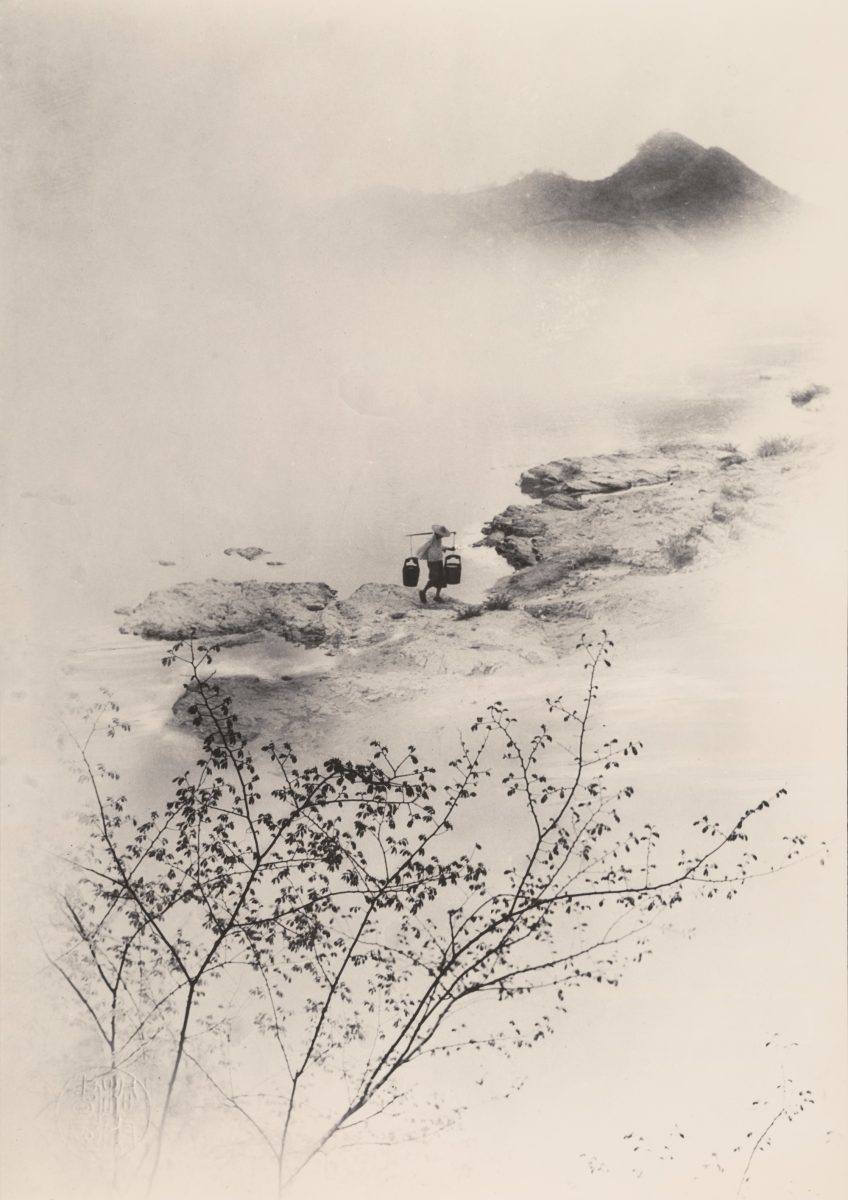
Light and Magic: The Birth of Art Photography opens at Tate Modern on 14 October 2026 and runs to 21 February 2027 in the Eyal Ofer Galleries. The exhibition tells the global story of pictorialism, the first international art photography movement, tracing how it developed across the world from the 1880s to the 1960s. More than 200 rare prints by over 80 artists come from Seoul and Sydney to New York, Cape Town, Brazil and Singapore, and a working darkroom in the gallery shows visitors the processes behind the pictures.
The movement's premise was simple and, at the time, radical: that a photograph could be a work of art, not merely a record. The pictorialists pursued that claim with chemistry. They coated their own papers, scratched and brushed their negatives, printed through tissue and gauze, and treated every print as a unique object. A section of the exhibition is devoted to the craft of photographic printmaking itself, revealing the experimental techniques that allowed photographers to transform each print into a unique work of art, alongside examples of alternative printing processes, studio portraiture and early colour photography. The working darkroom in the gallery demonstrates the complex methods behind these remarkable images, so the labour is visible, not just the result.
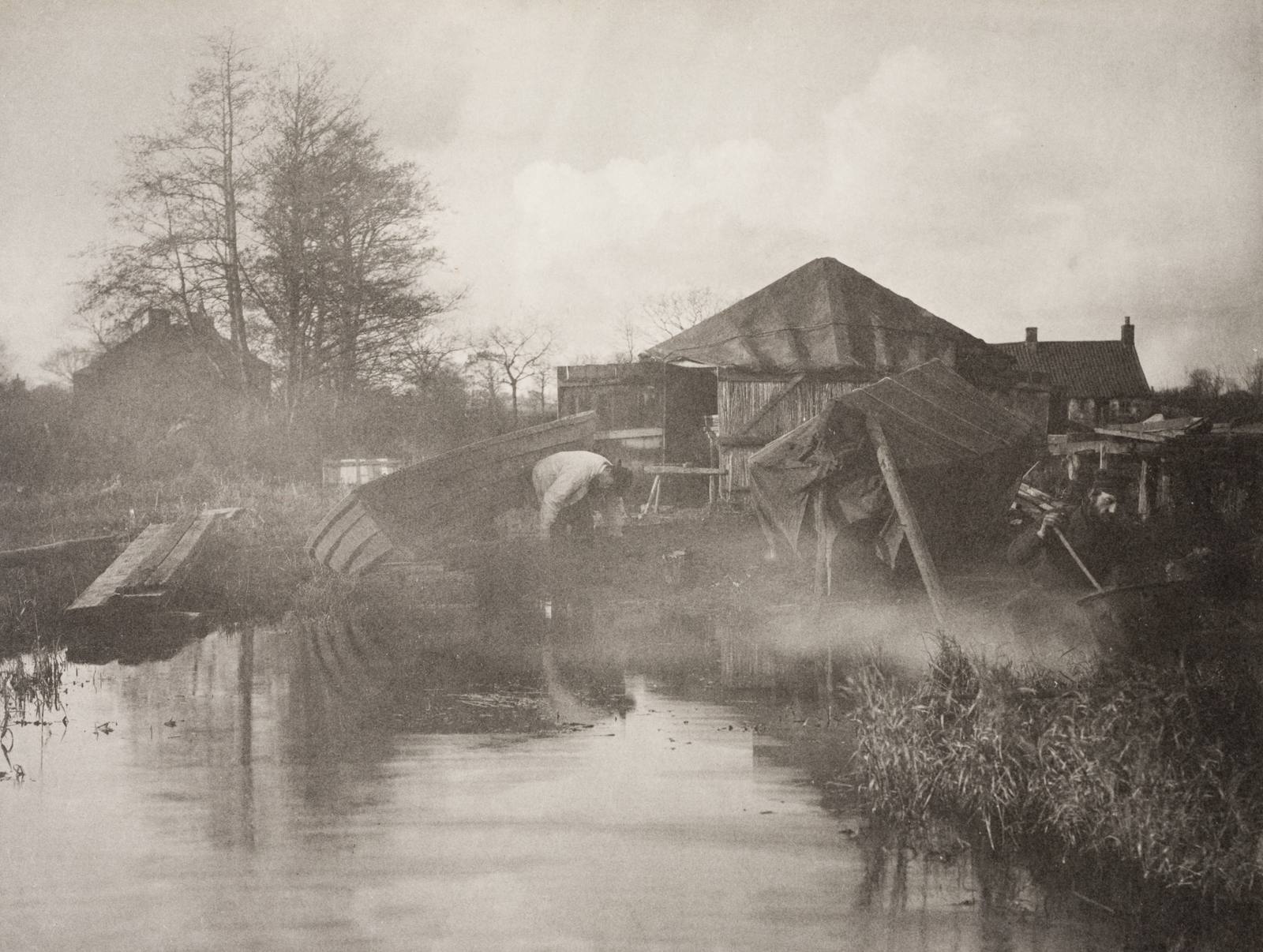
The British chapter belongs substantially to Peter Henry Emerson, whose platinum prints of the Norfolk Broads argued for photography as a naturalistic art. His 1886 image A Norfolk Boat-Yard, showing boat-builders at work among hauled-up hulls and still water, is among the works Tate presents in the exhibition's printmaking section: naturalism that prints like a painting and refuses to be either.
The American chapter runs through Alfred Stieglitz, whose 1893 photograph The Terminal catches a horse-drawn streetcar in a New York snowstorm, steam rising from the horses, the driver hunched against the weather. And through Gertrude Käsebier, whose soft-focus interiors made the domestic devotional: Blessed Art Thou Among Women, from around 1900, shows a mother in a white gown leaning toward her young daughter, the blur not a flaw but the doctrine.
What sets this exhibition apart is its refusal of the old map. Pictorialism has usually been told as a Western story with a few satellites. Here the international network of photographic societies, camera clubs and salons is given its own architecture: publications, journals and rare books from organisations including London's Royal Photographic Society, Shanghai's Guangshe, South Korea's The New Line Group and the Photographic Society of Singapore show how the movement developed through global exchange rather than isolated national movements.
The exhibition is billed as the first major show to treat pictorialism as a worldwide movement rather than a set of national schools, and the loans support the claim. The Lang Jingshan print that leads the publicity comes from the Royal Photographic Society Collection at the V&A, one of the great historic holdings of early photography. Around it, the galleries move from Seoul to Sydney without changing register: the same soft focus, the same hand-worked surfaces, the same conviction that a photograph earns its place on the wall by being made, not merely taken.
The final galleries reconsider pictorialism's relationship with modernism, the movement it supposedly lost to. Works by photographers including Lionel Wendt, Shigeru Onishi, Edward Steichen, Paul Strand and Edward Weston show how pictorialist ideas continued to shape photographic experimentation well into the mid-twentieth century. The final section features Wendt's solarised 1930s portraits alongside Onishi's experimental 1950s work. The supposed defeat starts to look more like an inheritance.
That is the exhibition's real thesis, and it lands. The pictorialists wanted the camera to be taken seriously as an instrument of art; a century later, a museum is arguing that the seriousness was never confined to the familiar centres. The working darkroom makes the point physically: this was always a craft of the hand, and the hands were everywhere.