Features
The Calendar That Became a Museum
A tire company's corporate gift invented the most exclusive publishing format in photography.
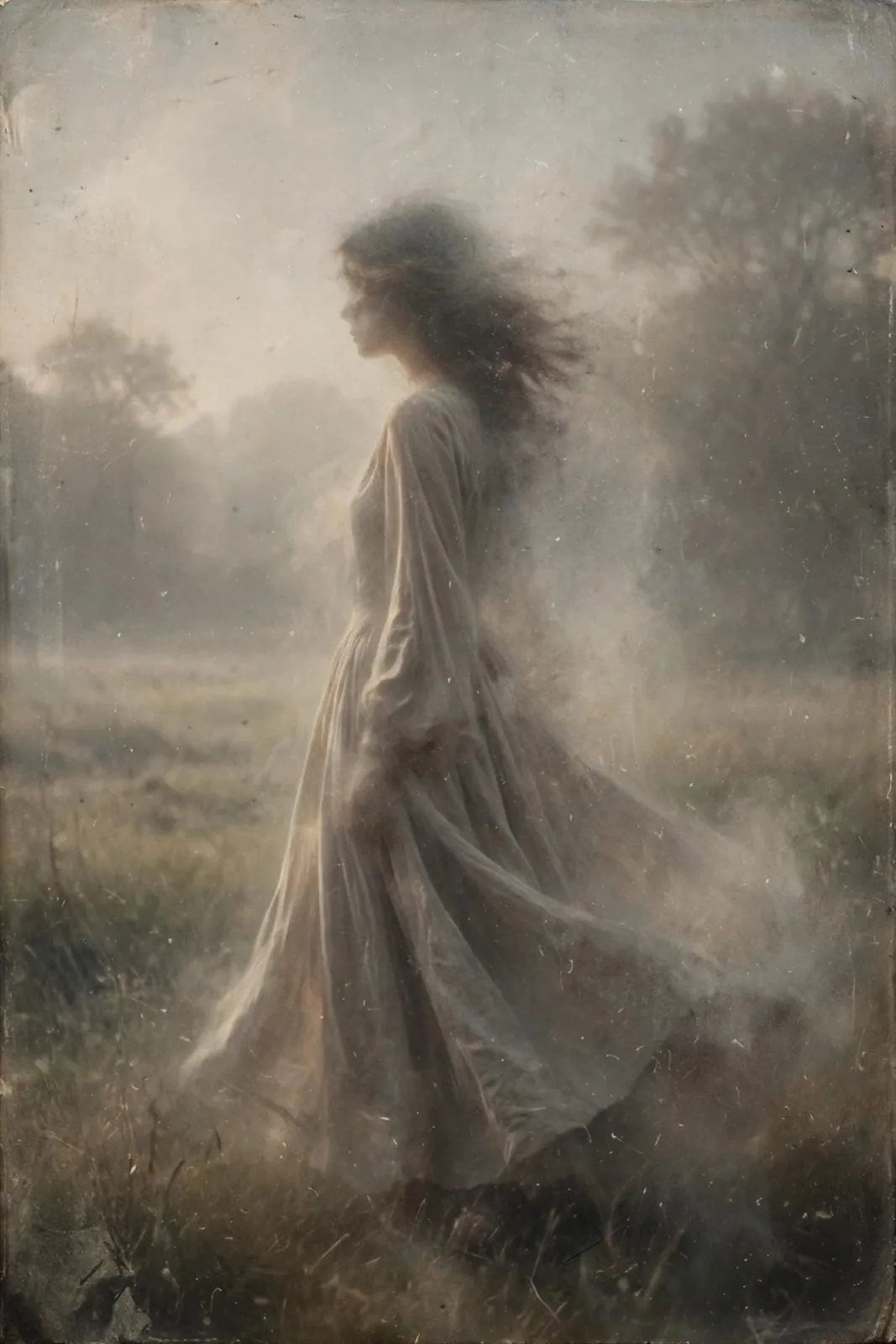
It is soft at the edges, grainy in the shadows, and painted in the kind of light that does not exist outside a darkroom. A figure half-dissolves into it. In 1972, this was not what a Pirelli calendar looked like. The Pirelli calendar was the sharpest, glossiest, most expensive cheesecake in Europe, shot by men, for men, in hard sunlight. Then Pirelli handed the commission to Sarah Moon, a former model turned photographer with four years behind a camera, and she returned something that looked like a memory of a calendar rather than a calendar. It was the first time a woman had shot it. It remains the strangest thing the company ever published.
The calendar had started as a sales tool. In 1964, Pirelli's British subsidiary wanted a marketing strategy that would distinguish it from domestic competitors, so the company appointed art director Derek Forsyth and photographer Robert Freeman, famous for his portraits of the Beatles, to produce something new. What they produced was an exclusive, beautifully printed calendar of risqué photographs, conceived as a corporate gift. From the beginning it had a strange status: it was advertising that was not for sale. Pirelli printed it in a limited run and sent it to a confidential list of clients and VIPs. You could not buy one. You could only be chosen.
That is the whole trick, and it worked so well that it became an institution. The calendar ran from 1964 to 1974, with no edition issued in 1967, then stopped for nine years when the oil crisis and the recession made a luxury giveaway hard to justify. It relaunched in 1984 and kept going, year after year, commissioning the most acclaimed photographers of the moment: Avedon, Newton, Leibovitz, Ritts, Parkinson, Testino, Demarchelier, Beard, McCurry, Roversi, and at various points even Karl Lagerfeld. The company gave each of them something no magazine ever offered: something close to total creative freedom, a serious budget, a tightly limited print run, and an audience that would never see it unless Pirelli decided they should. Scarcity was not a flaw in the distribution. It was the distribution. Commerce accidentally funded art, and then pretended it had meant to all along.
Sarah Moon was the accident inside the accident. Born Marielle Warin in 1941, she had modeled in Paris and London under the name Marielle Hadengue, working with Penn, Newton and Bourdin. She picked up a camera in the late 1960s to photograph the romantic world of Cacharel, and her early fashion work for Biba and Nova magazine was already a deliberate break from the hard, glossy eroticism of the industry's men. Soft focus. Unusual crops. Scratches and distortions. Images that behaved like fading memories. For the 1972 calendar, she shot the way she always shot, which is to say she ignored the brief and made Sarah Moon photographs.
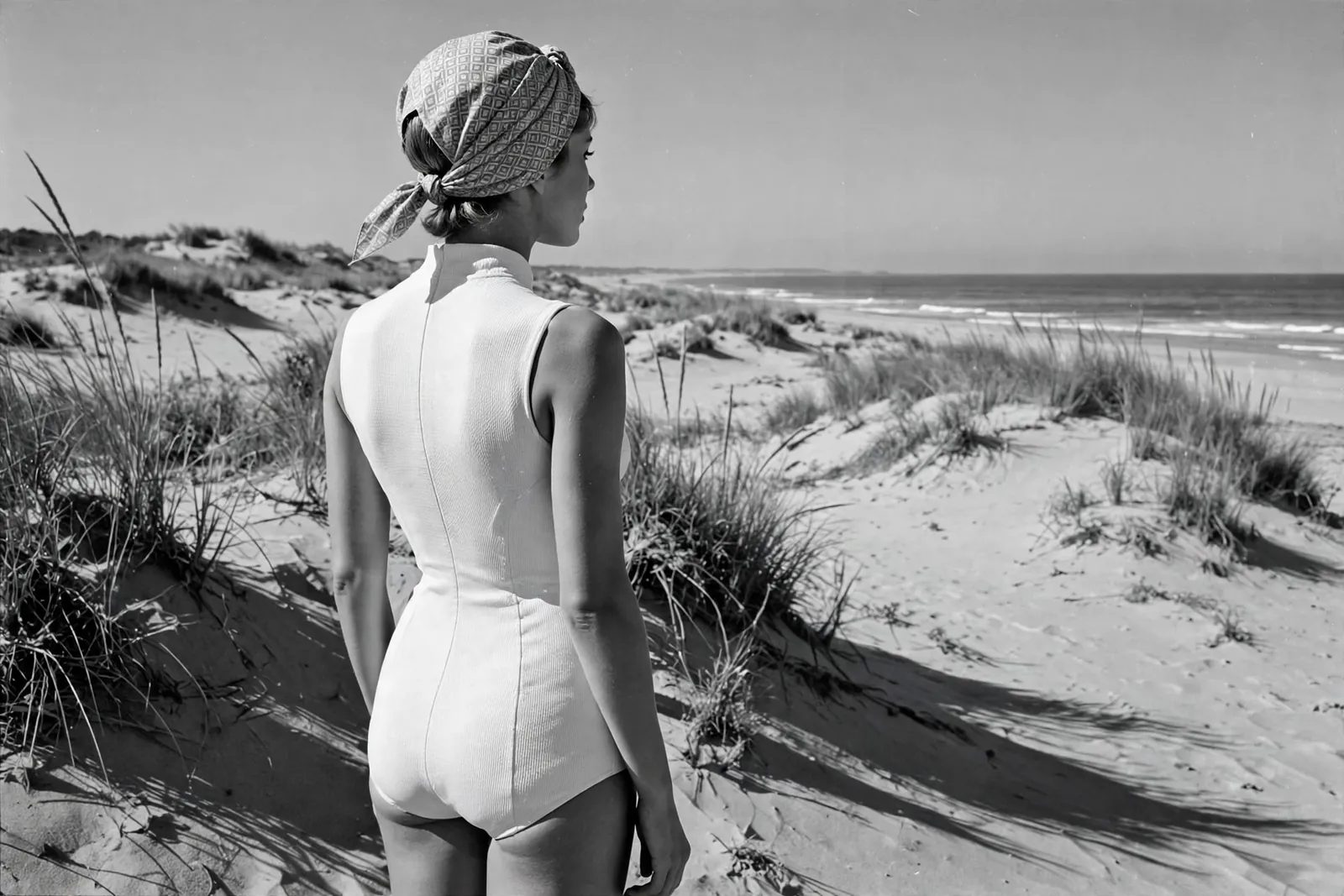
Pirelli itself divides the calendar's history into four eras, and each one reads like a chapter of the industry's biography. The first decade, 1964 to 1974, was the corporate gadget becoming an exclusive gift, shot by Harri Peccinotti, Brian Duffy and Peter Knapp among others, with young models in distant, exotic locations designed to make the viewer dream. The second, 1984 to 1994, was the relaunch: prominence given not only to the woman but also to the product, the tyre appearing discreetly as a shadow on water, a mark on sand, ruffles in a lavish dress. The third, 1994 to 2015, was the cult era, pure glamour and desire. The fourth, from 2016 to today, is the calendar reading the culture and changing with it. Moon's 1972 sits in the first era like a message from the future. On paper it is a corporate giveaway, a gadget. In practice it is the only major photography commission in the world with no newsstand, no advertiser to please, and no reader to retain. The photographer answers to one client, Pirelli, and Pirelli's interest is prestige, which is best served by letting the photographer do whatever she wants. The 2016 edition pushed this logic to its limit: Annie Leibovitz shot Yoko Ono, Serena Williams, Patti Smith and other women chosen for achievement rather than beauty, and the calendar briefly became a statement about what the format could be. The 2020 edition, shot by Paolo Roversi in Verona with no nudity at all, pushed it further. It could be anything. That was the point all along.
Moon's career after the calendar is its own argument for the commission's judgment. She went on to shoot more than 150 television commercials and campaigns for Dior, Chanel, Comme des Garcons and Issey Miyake, published books including Improbable Memories (1981) and Vrais Semblants (1991), made a film on Henri Cartier-Bresson, won the International Center of Photography's Infinity Award for Applied Photography in 1985 and France's Grand Prix National de la Photographie in 1995. The grainy, haunted, painterly style she brought to the 1972 calendar was not a phase. It was the work, and the work outlasted every trend that surrounded it. Pirelli's gamble, if it was a gamble, was simply to hire the photographer as she was and get out of the way.
Moon has described her own method with a bluntness that cuts through all of this: her photography, in her own account of it, is pure fiction, expression rather than defined statement, an echo of the world rather than a record of it. Read that against the calendar's history and it lands harder. The Pirelli commission sells tires through beautiful women. Moon's version sells nothing. It charges reality with feeling and asks to be believed as a mood rather than a fact. The tire company paid for it anyway, printed it beautifully, and sent it to its best customers. Somebody in Milan understood, or pretended to understand, that prestige and fiction are the same business.
There is a reason the calendar is collected the way museum objects are collected. It was never sold, so every copy in circulation arrived by gift or by theft, which gives each one a provenance. The print runs were small, the photographers were the best in the world, and the production standards were absurd: this was a company spending real money on a thing it gave away. Taschen's 50th anniversary volume, Pirelli, The Calendar: 50 Years and More, even included the previously unpublished 1963 calendar by Terence Donovan, the precursor to the legend, and a selection of shots once judged too risqué to print. The giveaway had become an archive. The archive had become a book. The book sits in museum shops, which is where the whole enterprise was always heading.
It would be easy to treat the calendar as a curiosity, a rich company's vanity project. That misses its structural importance. For sixty years, with interruptions, the Pirelli calendar has been the purest publishing format in fashion photography: a commission with almost no commercial constraints, distributed to almost no one, collected by everyone, shot with nearly total freedom. Magazines sell the reader to the advertiser. The calendar sells the photographer to history, and bills Pirelli. No other format in the medium works this way. It should not exist. It is the best thing a tire company ever made.