On a professional fashion set, there is a third collaborator standing at the monitor, and it is not a person. Capture One Pro is the industry standard for tethered shooting, the software that puts the frame in front of the photographer, the art director, and the client while the model is still in position to change it.
The tethered workflow is the software's reason to exist. The camera feeds the computer, the frame appears on the big screen, and the shoot becomes a conversation instead of a gamble. The art director sees the crop. The client sees the garment. The photographer sees the light. Decisions that used to happen in the edit, days later, happen now, while the set is still standing.
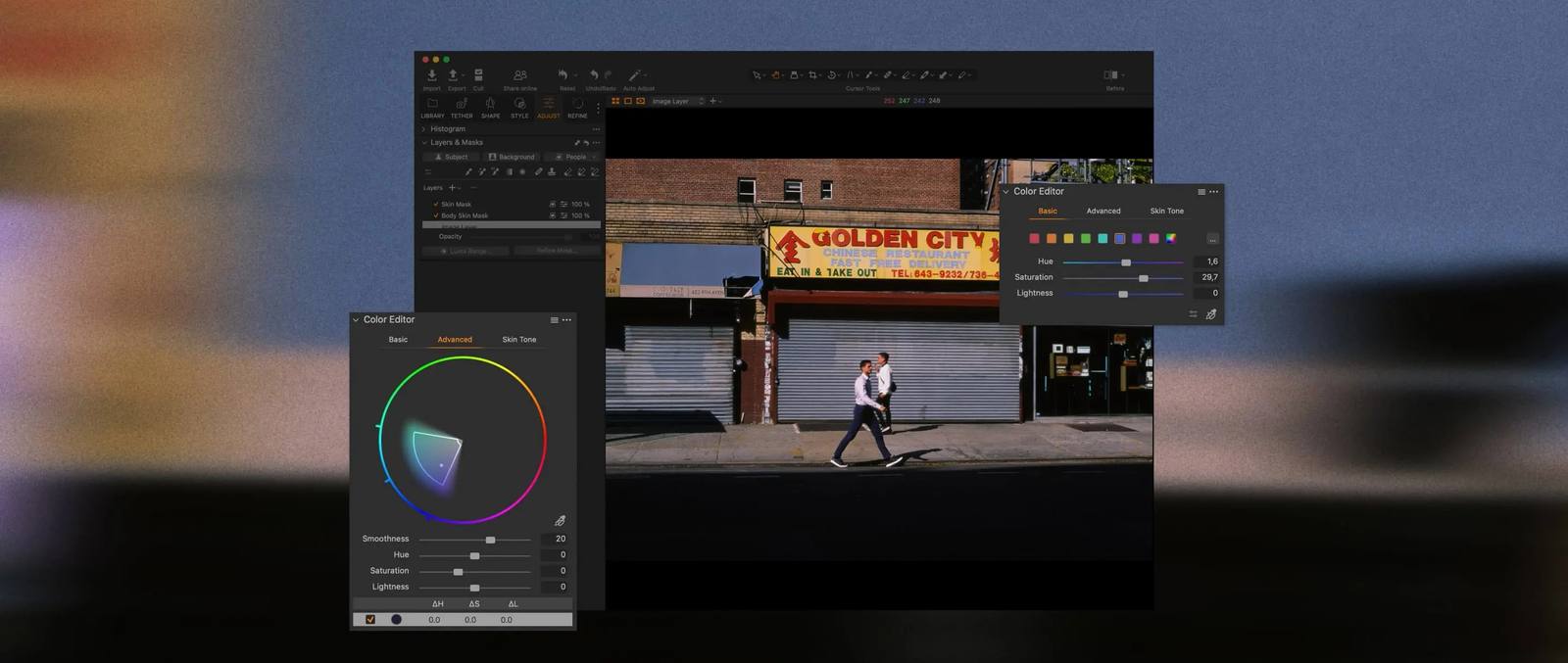
Session-grade color control is the craft argument. Fashion lives or dies on color: the garment must render true, the skin must hold, the grade must survive the journey to print. Capture One's color tools are built for the working colorist's pace, adjustments that carry across a session, styles that hold a whole story together, proofing that tells the truth about the file.
Who it serves: everyone on set with an opinion, which on a fashion shoot is everyone. The photographer shoots into it. The digital tech runs it. The art director approves from it. The client watches it. The software's real user is the shoot itself, the collective decision-making that a tethered set makes possible.

Where it sits in the process: between the camera and the edit, the live nerve center of the shoot day. Files are captured, culled, graded, and backed up inside the session. By the time the set wraps, the edit has already begun, and the retoucher receives files that every stakeholder has already seen.
The dry observation: software does not take the photograph, and Capture One's devotees sometimes talk as if it does. What it actually does is rarer. It makes the photograph a shared object at the moment of capture, which is the closest a fashion set comes to democracy. The frame belongs to everyone in the room, and the room decides together.
The session file itself has become part of the deliverable. Clients increasingly ask for the Capture One session, not just the exports, because the session is the record of every decision the room made together. The software that was once backstage infrastructure is now front-of-house evidence. The tethered workflow turned out to be an archive as well as a method.
Licensing options change; confirm pricing at the linked page. The instrument's legacy is already written: the tethered set is the modern fashion set, and this is the software that defined it.