Books
The Book Paris Made
Before America would look at itself, it had to be shown itself by Paris, in French, and refused.
The first edition is in French. Les Américains appeared in Paris on 15 May 1958, published by Robert Delpire, and the object tells you everything before you open it. Eighty-three photographs, chosen by Robert Frank himself from some 28,000 frames shot on the road. Around them, texts by Simone de Beauvoir, Erskine Caldwell, William Faulkner, Henry Miller, and John Steinbeck: French literary commentary wrapping an American road trip that no American publisher would touch.
Hold that object in mind, because it is the book that made the book. The Americans, the edition everyone knows, came a year later, from Grove Press in New York, and it is a different object wearing the same 83 pictures. The French texts were stripped out. An introduction by Jack Kerouac was added. Each image got a brief caption that barely describes the scene. Same photographs, new weather. The redesign is the story.
Frank was born in Switzerland in 1924 and immigrated to the United States in 1947, finding work in New York in the fashion industry. In 1955 he won a Guggenheim Fellowship to travel the country and document the effects of post-war industrialization. He drove for two years with a Leica, a small camera that let him shoot fast and unobserved, and he came back with hundreds of rolls of film. The shooting ratio works out to about 337 to 1. One frame kept for every nine or ten rolls shot. The edit was not a cleanup. It was the authorship.
Frank's Guggenheim application had stated his intent plainly: to travel the country and document the effects of post-war industrialization. The route ran from New York to Florida, then across the South and north and west to Montana and California. Two years, one Leica, and a foreigner's eye on a country at the peak of its certainty about itself. The United States in the mid-1950s was the most powerful nation on earth, enjoying unheralded prosperity, and it had no interest in being shown its own shadows. That is the other reason no American publisher would take the book. The pictures were not only rough. They were unwelcome.
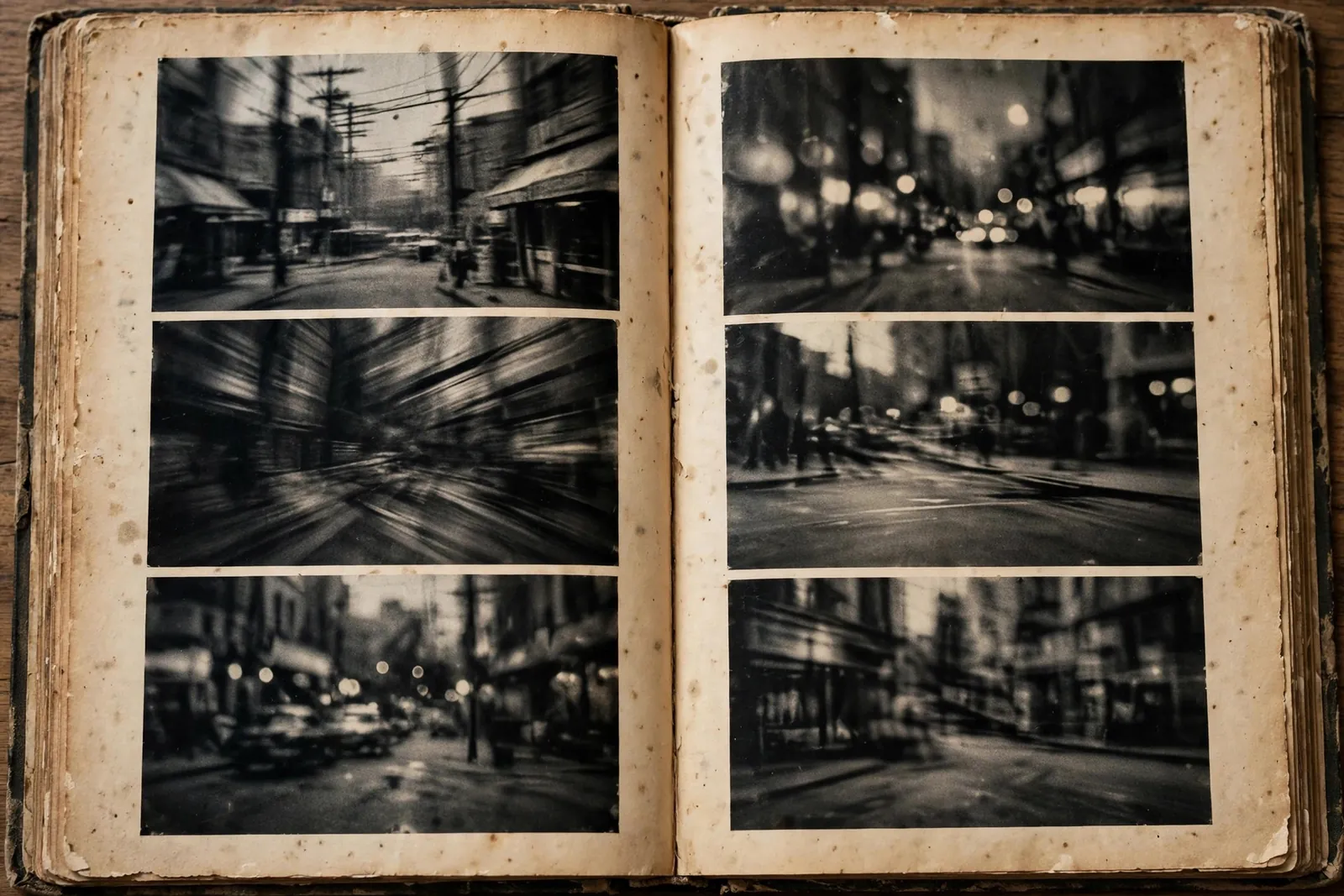
Consider what the edit refused. The pictures are rough, grainy, tilted, dark. Frank cropped hard, focused strangely, printed muddy, and broke every convention of good photographic technique that the American picture press held sacred. He wanted moments, not beautiful pictures, and the book's sequence makes the moments argue with each other: flags and funerals, galas and gas stations, the rich looking as cut off and lost as the poor. The design of the object, the pairing of images across spreads, the rhythm of dark against darker, is where the meaning lives. The photographs existed. The book made them mean.
America's first response is a matter of record, and it belongs in any history of the object.
That was Popular Photography. Minor White's Aperture called the book "utterly misleading, a degradation of a nation." The documentary establishment read the technique as incompetence and the vision as ingratitude, which is what establishments do when the object refuses their terms. The book sold poorly at first. Frank, for his part, largely walked away from still photography afterward and went to make films.
Kerouac's presence in the American edition is usually told as a chance encounter: Frank met him in New York in 1957, showed him the photographs, and Kerouac offered to write something about the pictures. The introduction he produced is free-form and rambling, and it does something the French edition's five novelists could not do. It does not explain the pictures. It keeps pace with them. The American book's design decision, to strip out the literary commentary and add a single poet's run at the images, is the difference between a book about America and a book that moves the way America felt to the man who shot it.
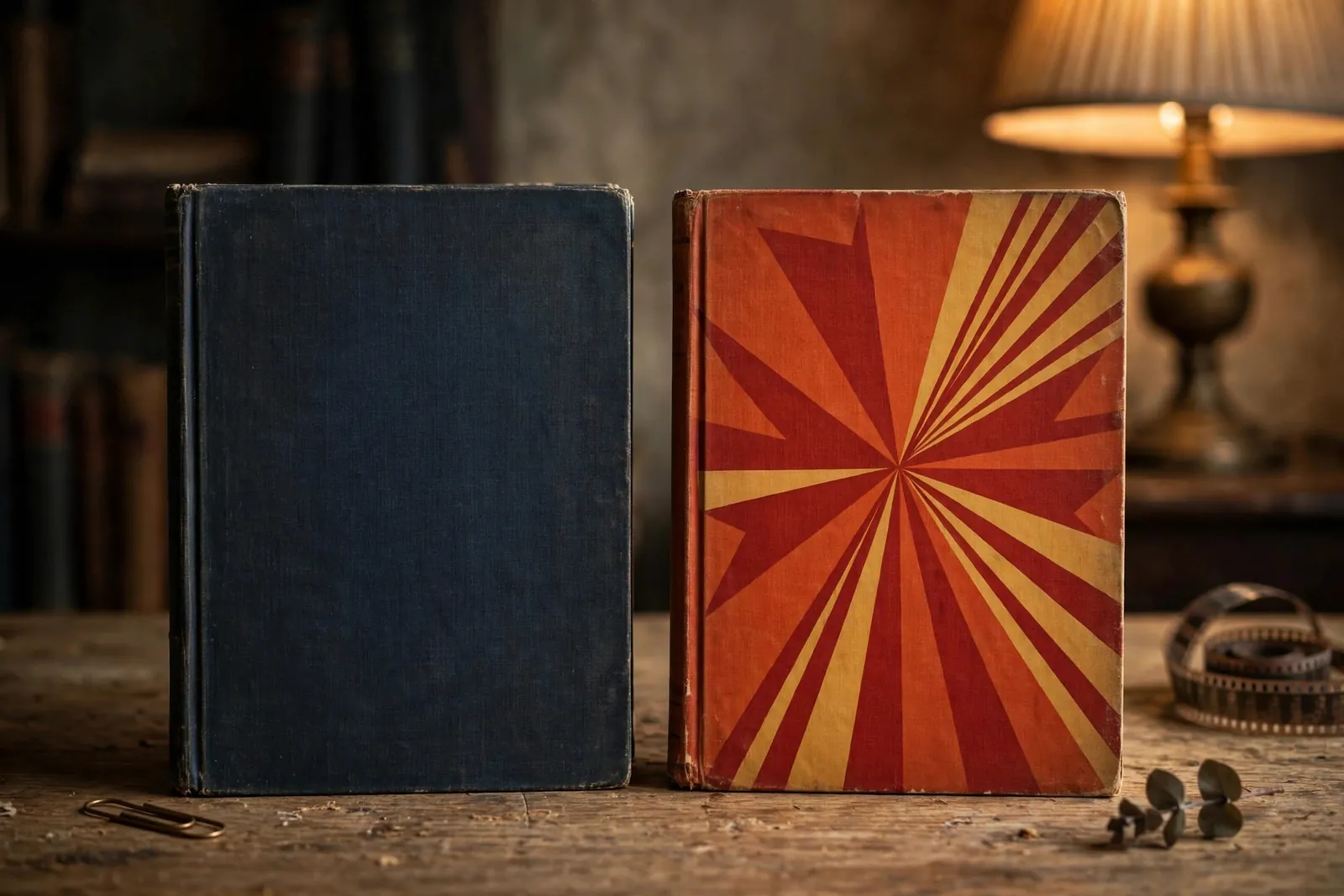
Now look at the two editions as objects, because the comparison is the whole lesson in bookmaking. The Delpire edition is a French intellectual's America: the photographs embedded in a chorus of established literary voices, the outsider's vision mediated by the insiders of French letters. The Grove edition is something leaner and stranger. The French writers are gone. Kerouac, whom Frank had met in New York in 1957, contributes a free-form introduction, the Beat sensibility meeting the Swiss eye, and the pictures are left to carry the book nearly alone, with captions so brief they barely describe the scene.
This is why the book belongs at the center of any serious account of the photobook. The Americans did not succeed because the pictures were eventually recognized as masterpieces, though they were. It succeeded because the object was designed to be undeniable: an edit of 83 from 28,000, a sequence with its own pulse, a physical book that taught the reader how to read it as it went. Kerouac said Frank had "sucked a sad poem right out of America onto film," and the comparison holds for the sequencing too. Confident, unpredictable, weaving around its motifs, the book moves like a solo: flags, jukeboxes, television glow, automobiles, the background and foreground of daily life switching without warning.
The craft lesson is in the ratio. Every photographer edits. Frank's edit is the most consequential in the medium's history because it was the most ruthless, and the ruthlessness was the point. The flaws the critics named were not overlooked. They were selected. The blur, the grain, the tilt: these were the evidence that someone had actually been there, and the book's design refused to launder them into respectability. The object kept the roughness because the roughness was the truth claim.
There is a final irony in the object's history, and it is a bookmaker's irony. The book that taught American photography how to see itself could not be made in America until Paris had made it first. Delpire's edition proved the object could exist; Grove's edition proved it could exist in English, stripped down, with a poet instead of a panel of novelists. The two editions sit on the shelf as a matched pair: the same 83 pictures, two different books, and between them the entire education of the modern photobook. The pictures are the same. The book is what changed.
The physical facts of the object deserve the last word before the verdict. The cropping is aggressive, the focus unconventional, the exposures muddy by the standards of the day, and every one of those decisions survived the edit because the edit was the design. A photobook is not a portfolio with a spine. It is a sequence with a temperature, and The Americans runs cold and then colder, the dark pages accumulating until the few luminous images land like breaks in weather. That temperature was set in the cutting room, not on the road. The road supplied 28,000 frames. The book supplied the meaning.
That is the verdict this object demands, and it is a verdict about design, not photography. Critics have called The Americans perhaps the most influential photography book of the twentieth century, and if the claim holds it is because it is the most completely designed one: the edit, the sequence, the cropping, the paper, the stripping out of one set of words and the adding of another. Frank shot the frames. The book made the work. Paris made the book possible, and then America, a year late and a chorus short, made it its own.