Books
The Slower Exhibition
Brodovitch's Ballet proved the book could do what the gallery could not: keep the dance moving.
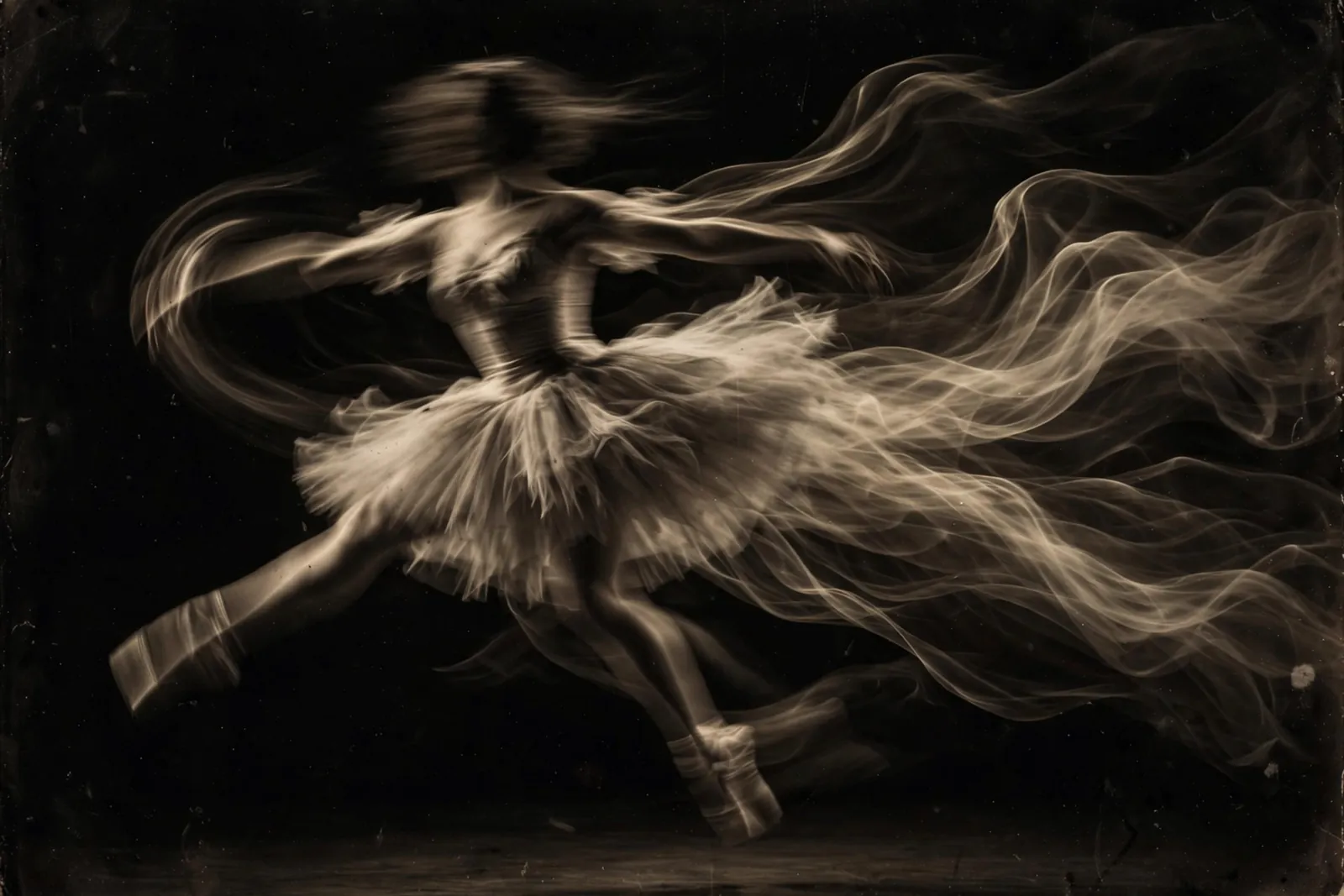
She is moving, and the photograph refuses to apologize for it. In Ballet, a dancer crosses the frame as a brushstroke of motion against deep black, and the blur is not a failure of the exposure. It is the exposure's subject. Open the book anywhere and the pages do what the stage did: they keep going. The images run full-bleed into the gutters, one into the next, in a filmic continuum that asks you to turn the page the way the dancer crossed the stage, without stopping.
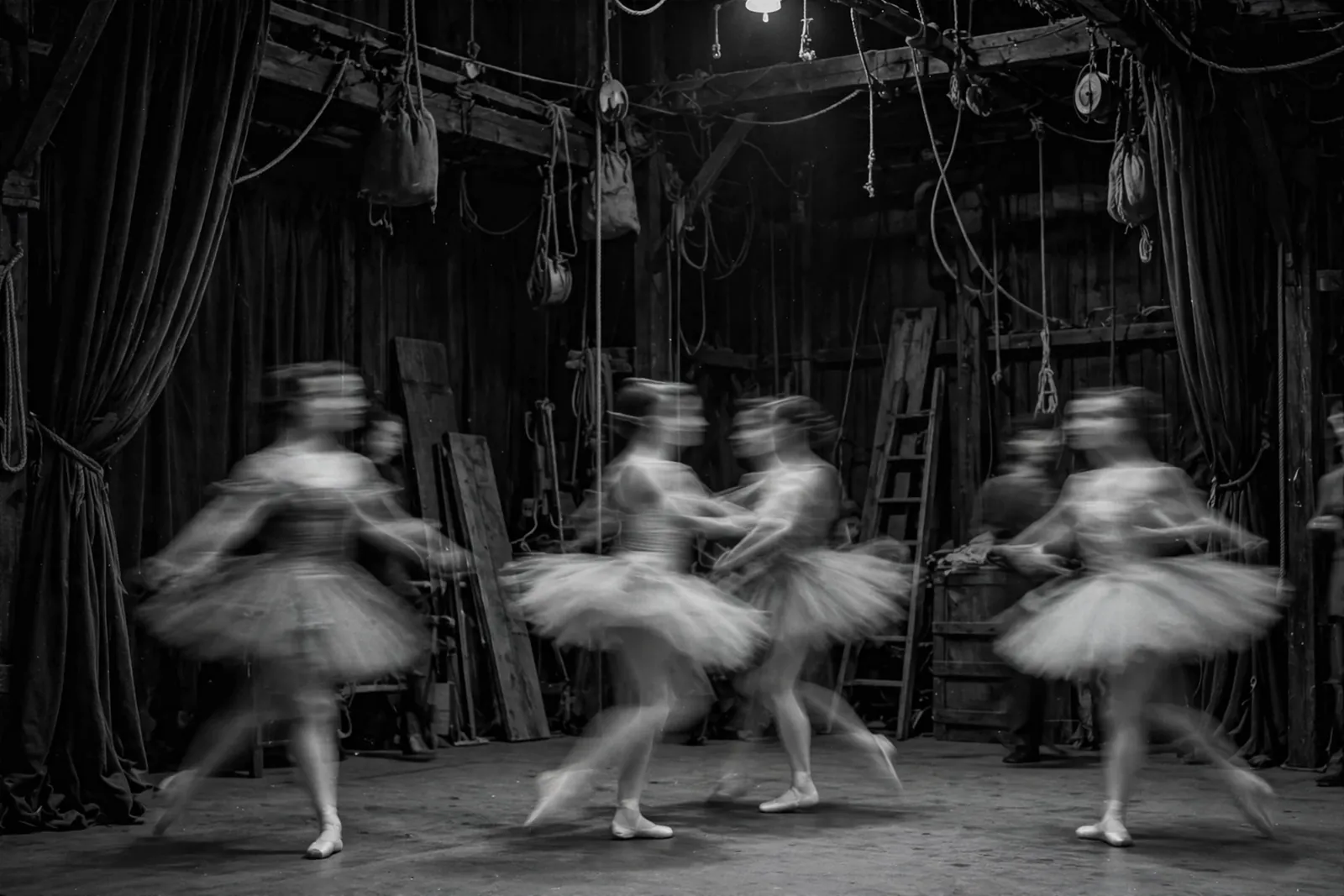
Ballet: 104 Photographs by Alexey Brodovitch was published in New York in 1945 by J. J. Augustin, with text by Edwin Denby. It is the first and only book Brodovitch authored as a photographer, and it remains one of the most legendary photobooks of the twentieth century. The photographs were made a decade earlier, between 1935 and 1937, when Brodovitch, handheld 35mm Contax in hand, photographed the visiting Ballets Russes companies in New York, on stage and in rehearsal. He worked with the blur and the grain rather than against them. He printed for drama: deep blacks, heightened contrast, figures dissolving into motion.
The man behind the camera is the hinge of the whole story. Brodovitch began in 1920s Paris as a scene painter for Diaghilev's Ballets Russes, and he had run the art department of Harper's Bazaar since 1934, teaching a generation of photographers and designers that the spread, not the single image, is the art form. His students and hires included Avedon and Penn. The book he made as a photographer is, in that light, exactly what you would expect from him: not a collection of pictures but a designed sequence, eleven segments, one for each ballet, with typographic chapter heads set to the feel of the dance they introduce.
His day job is the reason the book matters beyond its rarity. At Harper's Bazaar, Brodovitch had spent a decade teaching photographers that the layout is the photography: asymmetrical grids, full-bleed images, white space used as a material. The photographers he gave early commissions to, Avedon and Penn among them, carried the lesson into the most famous fashion images of the century. Ballet is the lesson applied to his own pictures. The man who taught the page to move finally gave his own photographs a page that moves.
He almost did not make it. The blurry, grainy results had no place in the technique of the day, and the photographs sat for years before he reconsidered, printing the images to emphasize their strangeness. Only a few hundred copies of the book were printed. It became a rarity almost immediately, more talked about than seen.
That is the verdict Parr and Badger deliver in The Photobook, Volume I, and the judgment has held for eighty years. The legend rests on scarcity, a few hundred copies that made the book more discussed than seen, and on a double radicalism: images that broke the rules of good technique, and a design that refused the rules of the picture book with equal deliberateness. The radicalism they name is worth stating precisely, because it is a bookmaker's radicalism. The images violate the conventions of good technique on purpose: blur, grain, motion, the refusal of the sharp document. And the design refuses the conventions of the picture book with equal deliberateness: full-bleed pages bleeding into the gutters, no polite margins, no captions to mediate, the sequence carrying the entire cinematic performance. The book does not illustrate the dance. It restages it, in paper.
The construction repays a slow look, which is the only kind of look the book permits. Eleven segments, one for each ballet, with Denby's text and typographic chapter heads set to the feel of the dance. The photographs began, by Edwin Denby's account, as souvenirs: snaps of the Ballets Russes companies on their American tours. The souvenir became the masterpiece because he stopped apologizing for what the camera had actually recorded. The blur was not a technical failure to be corrected. It was the sensation of dancing, and the book's design is built to deliver sensation rather than information.
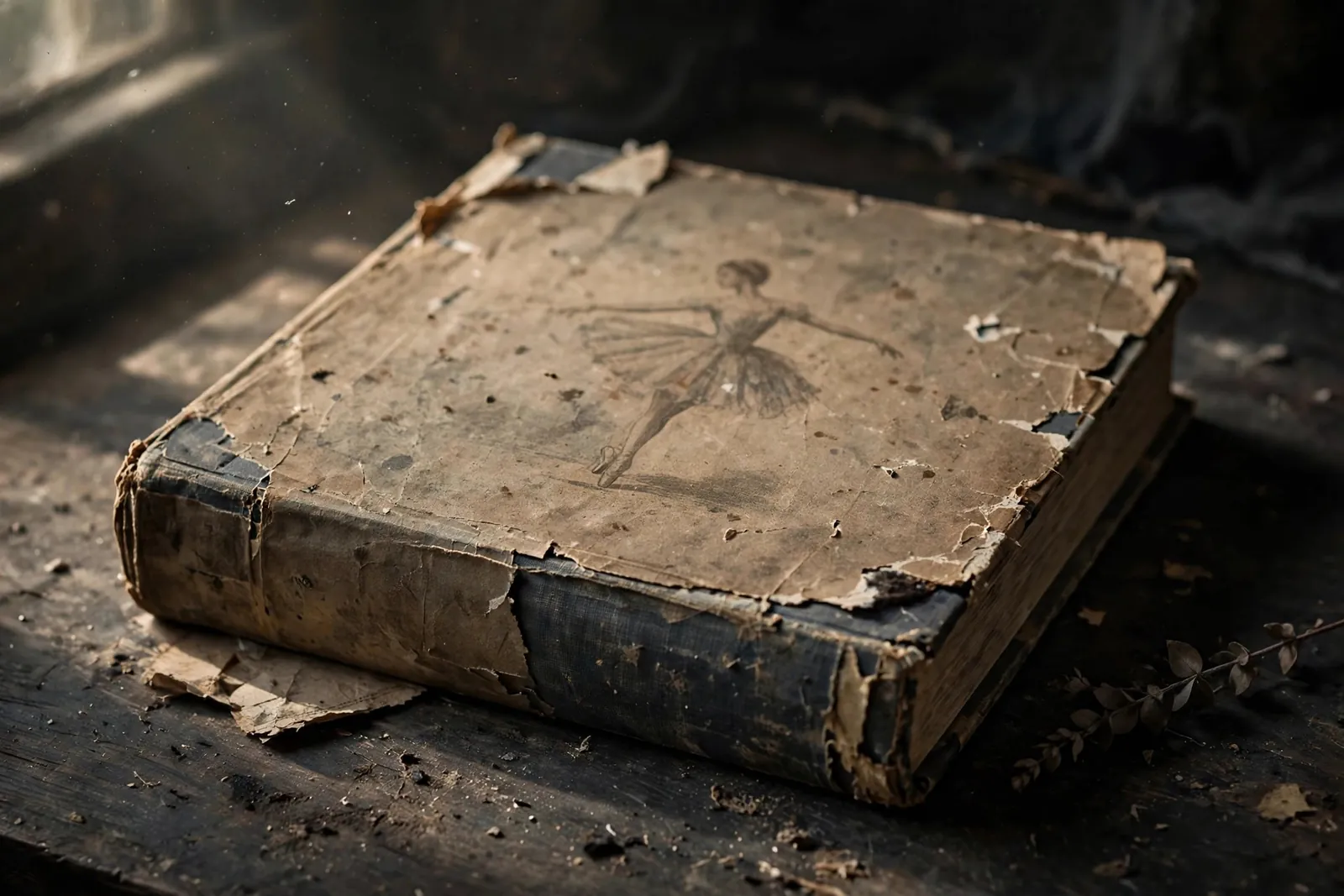
This is the argument the book has been making since 1945, and it is the argument this column exists to defend: for photographers, the book has always been the real gallery. The exhibition ends. The book stays on the shelf and teaches. Ballet taught the postwar photobook that a sequence could move, that design could be choreography, that the page could hold motion better than the wall ever would. Frank's Americans, thirteen years later, is built on the same lesson, and it became one of the century's most influential books. Every fashion photographer who has ever insisted on the monograph, the self-published edition, the expensive object in a medium of screens, is working in the tradition Ballet helped found.
Which raises the question the book keeps asking, louder every year. Why do image-makers who live on screens still insist on the slowest, most expensive object in the room? The answer is in the object itself. The screen is fast and forgets. The book is slow and returns. Ballet cannot be scrolled; it has to be paged through, at the body's tempo, and the tempo is the meaning. The few hundred original copies became legend, and the legend finally became accessible: Errata Editions reissued the book in 2011 as number 11 in its Books on Books series, reproducing every page spread of the original for the students and enthusiasts who could never afford the 1945 edition. The rarity made it myth. The reissue made it a textbook. Both prove the same thing: the object outlasts the exhibition because the object is the exhibition, bound.
For the fashion titles of today, the lesson is practical, not nostalgic. The monograph remains the industry's true exhibition space because it is the one object the photographer controls completely: the edit, the sequence, the paper, the pace. A gallery show is rented time. A book is owned time. Ballet proved it in 1945 with a few hundred copies and a handheld camera, and every photographer who has since paid for their own printing, chosen their own paper, and argued over the sequence is paying the book the compliment of imitation.
The reissue completed the argument the original had started. When Errata Editions published Ballet as number 11 in its Books on Books series in 2011, reproducing every page spread of the 1945 edition, the book changed status without changing a pixel. It went from legend to textbook, from the object collectors whispered about to the object students could actually study. That is the photobook's peculiar afterlife: the rare edition makes the myth, and the accessible edition makes the influence. Ballet now does both at once, which is more than most exhibitions manage in a lifetime.
Look at the dancer once more. She is still crossing the frame, eighty years later, still blurred, still refusing to hold still for the camera. The book around her is doing the same work it did in 1945: keeping the dance moving, one full-bleed spread at a time, in the slowest medium photography has. The gallery closed decades ago. The book is still open.