Portraiture
Bloodline, Worn on the Body
Meryl McMaster stages herself inside her ancestors' lives. As Bloodline opens at the Canadian Museum of History, forty eight large photographs ask what a portrait owes the people who came before the sitter.
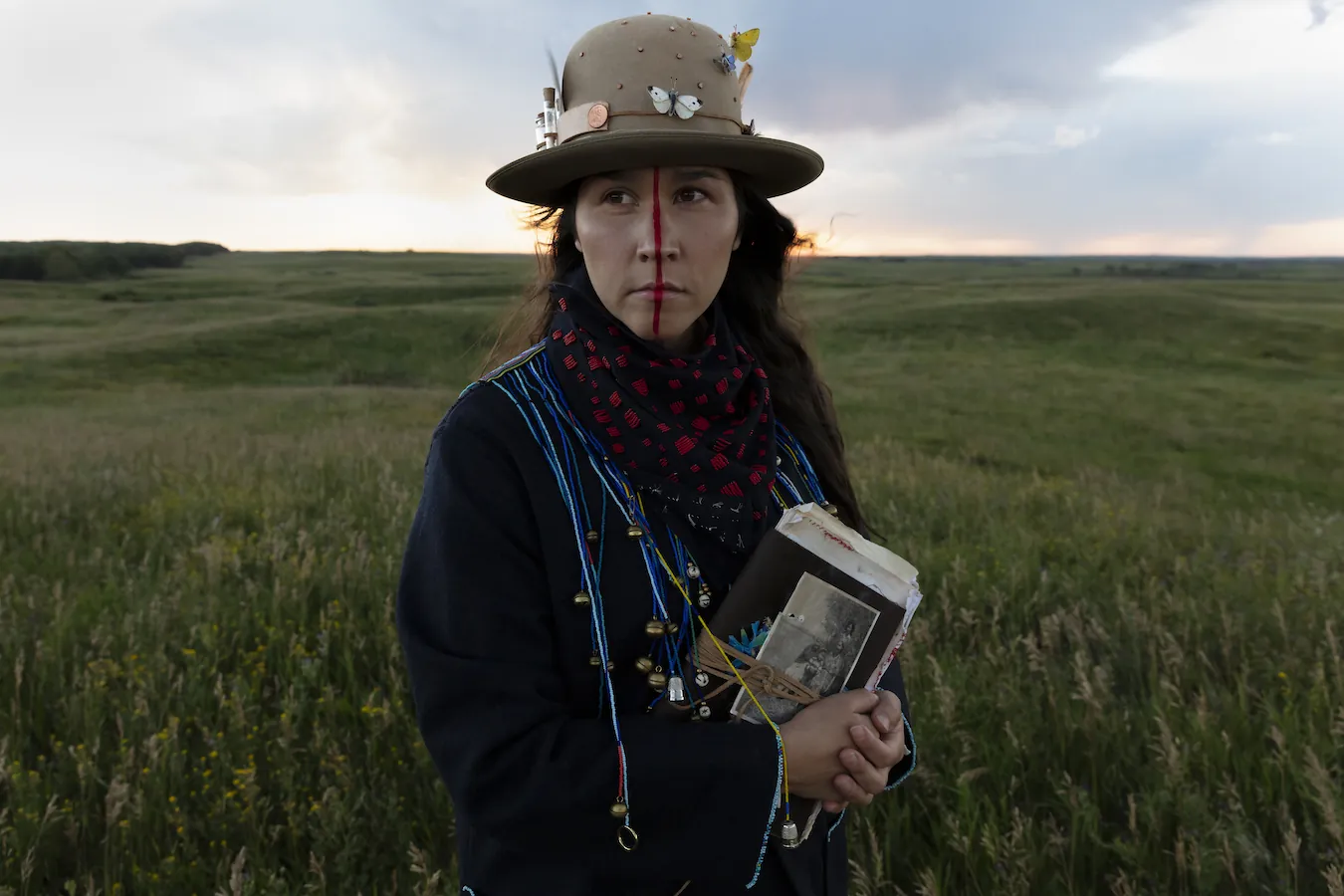
She stands in the grassland wearing the past as equipment. In Meryl McMaster's The Grass Grows Deep, made in 2022, she holds a bound album that bears a small photograph of her three grandmothers, carried out into the tall grass of the Red Pheasant Cree Nation at dusk. The ancestors are not illustrated in this self portrait. They are brought along. The work is one of forty eight large scale photographs in Meryl McMaster, nikihci-âniskotâpân / Bloodline, which opens at the Canadian Museum of History in Gatineau on 13 November 2026 and runs to 6 September 2027.
McMaster, who was born in 1988, works from a doubled inheritance. Her ancestry is Plains Cree and Métis on one side, British and Dutch on the other, and her medium for examining it is the staged photographic self portrait: elaborate costumes she builds by hand, props and sculptural garments, performance for the camera in open landscape. Bloodline gathers fifteen years of that work, from 2008 to 2023, and hangs it chronologically in five sections, from the earliest pictures to the most recent. The museum presents the exhibition in three languages, Plains Cree, French and English, a decision that is itself part of the argument: the wall text speaks in the tongue of the territory the photographs come from.
The grandmothers
The most recent body of work, Stories of My Grandmothers, made in 2022 and 2023, is the exhibition's centre of gravity. It is built from the lives of three women on her father's side, whose years on the Red Pheasant Cree Nation in Saskatchewan span a hundred and thirty years between them: her great great grandmother Mathilda Schmidt, called Tilly, who lived from 1870 to 1955; her great grandmother Isabella Wuttunee, called Bella, 1898 to 1980; and her grandmother Lena McMaster, 1921 to 2013. McMaster researched what the record holds of them, and where the record thins, she works from memory, family photographs and imagination, saying so openly. The portraits that result are not reconstructions. They are meetings, staged in the present tense, on the home ground.
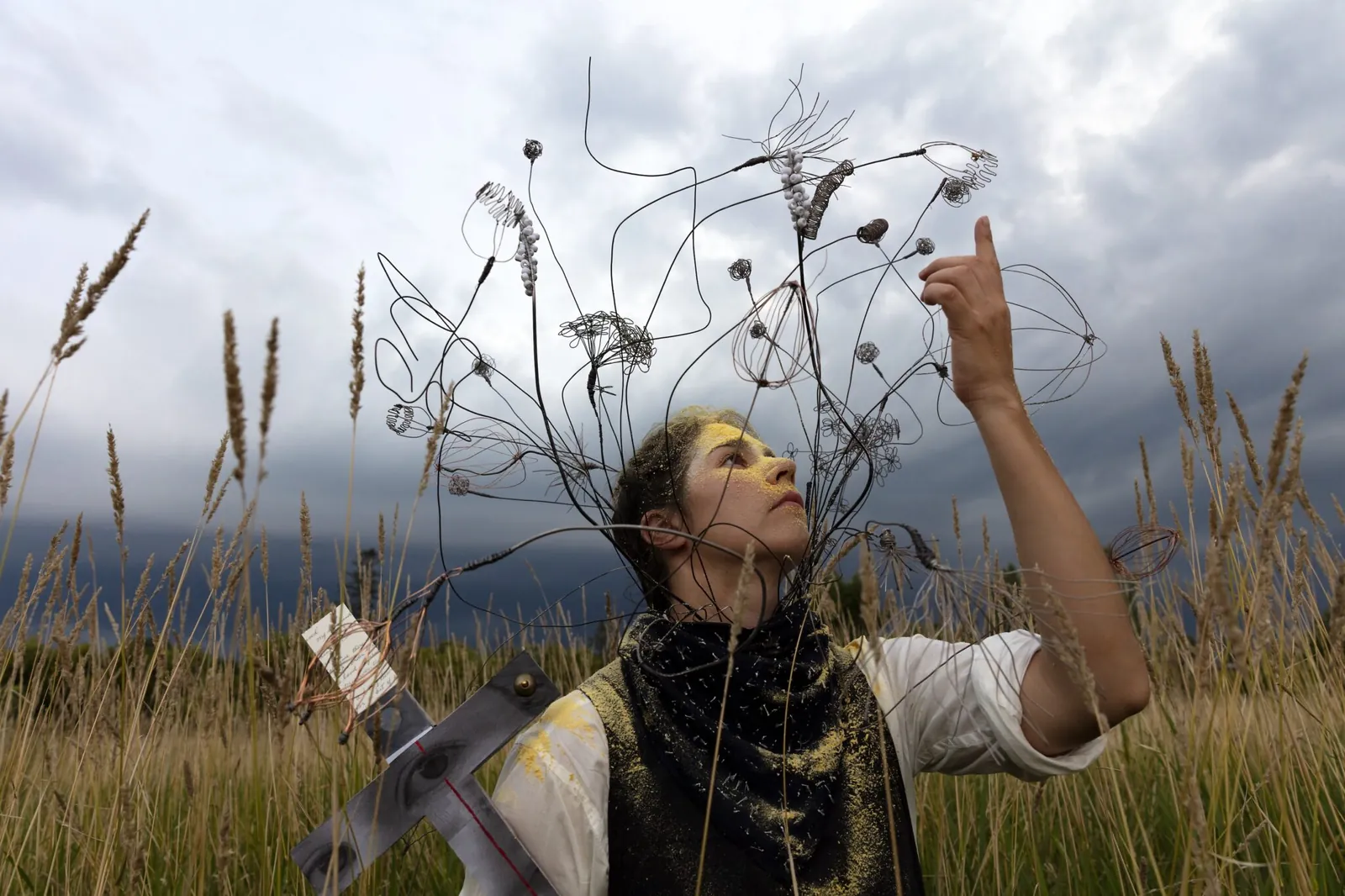
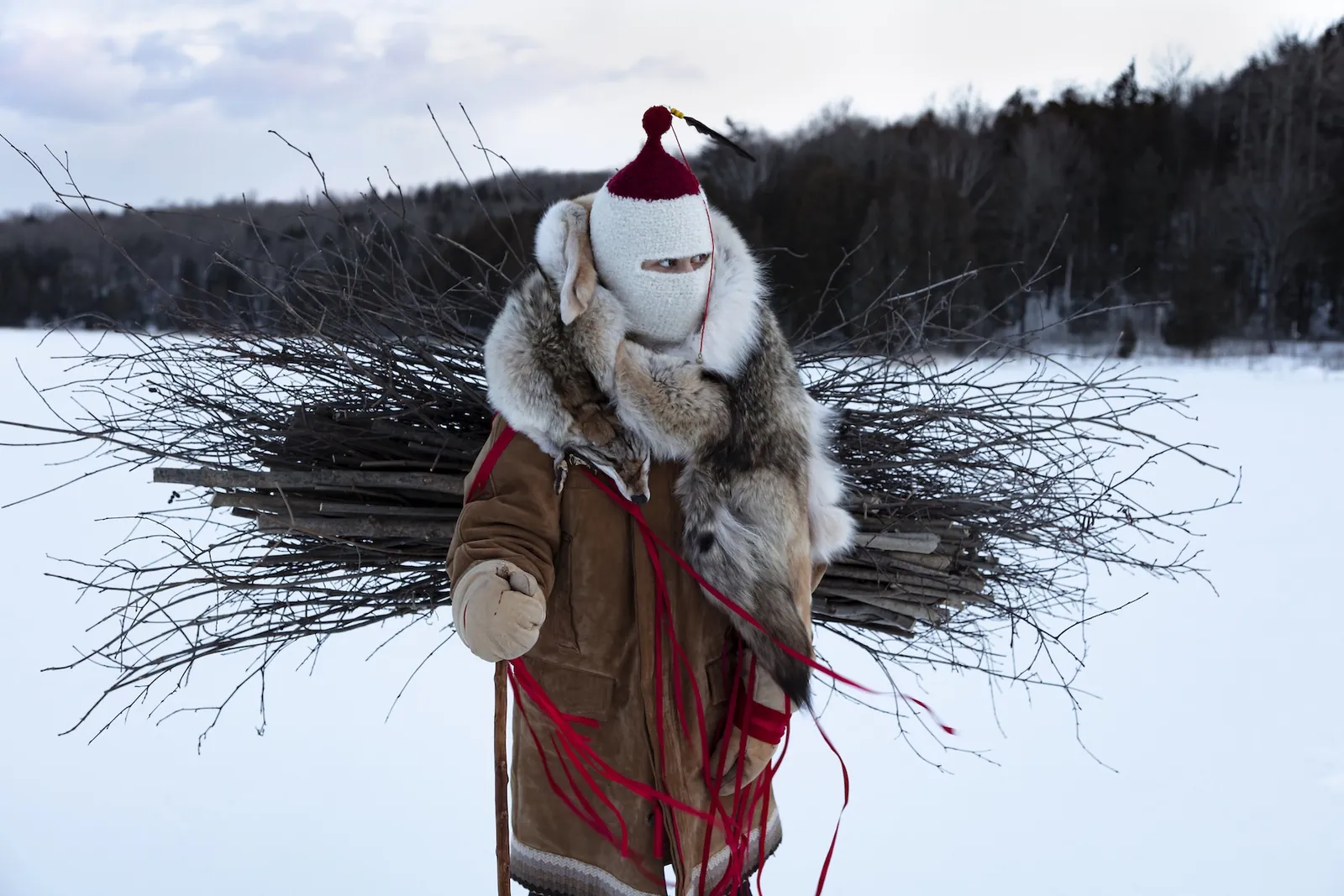
The symbolism inside them is specific, and it is documented. In Remember the Sky You Were Born Under, the plants and seed pods refer to Mathilda Schmidt's work gathering plants for medicine and for trade. In When the Shadows Fall, the bundle the figure carries answers diary entries by Isabella Wuttunee about collecting wood. These are large pictures, printed at 101.6 by 152.4 centimetres, and their scale matters to their claim. A family snapshot is private evidence. A portrait at this size, in a national museum, is a public assertion that these lives belong in the country's account of itself.
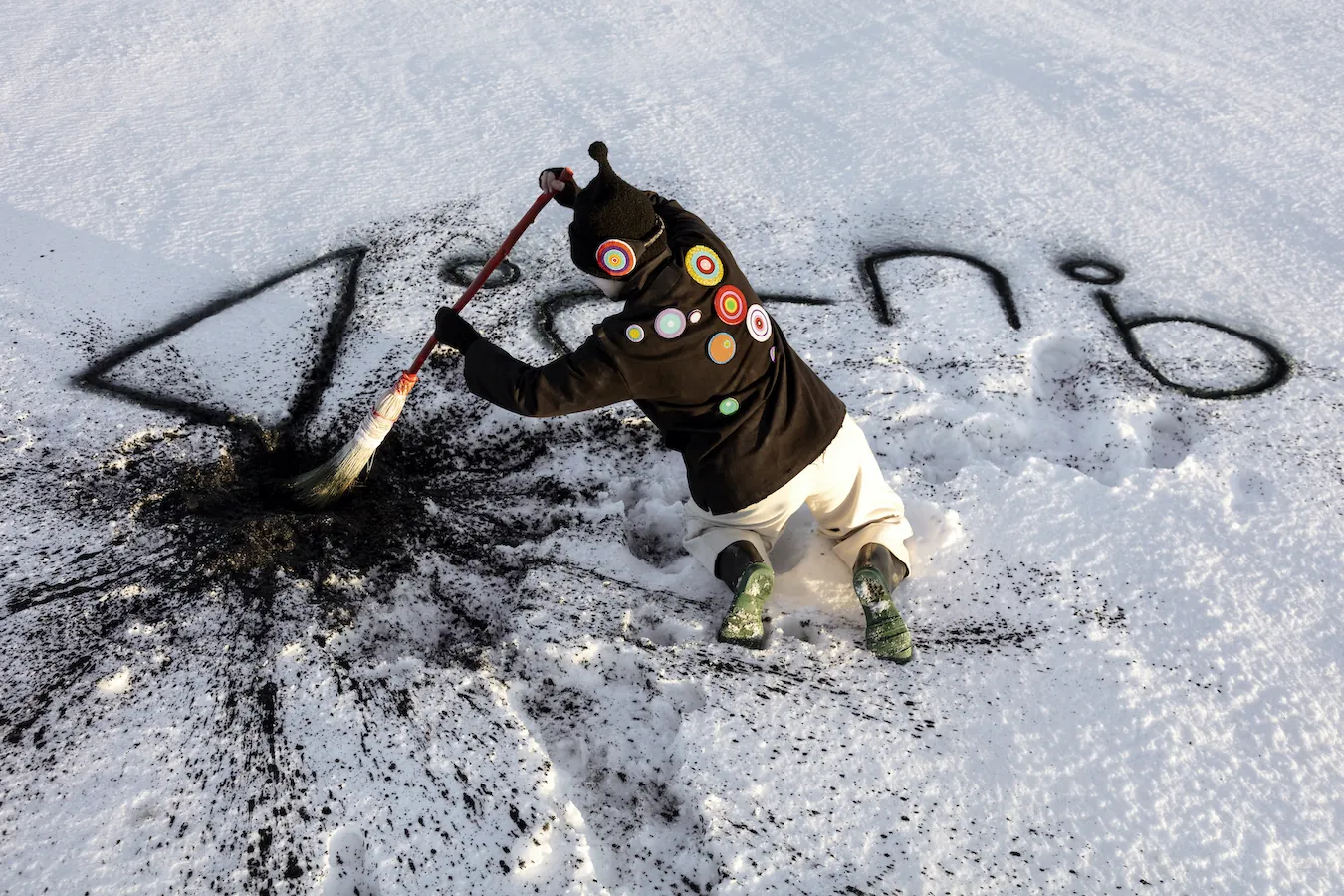
What surrounds the photographs
Around the photographs, the exhibition sets the evidence they grew from: reproductions of family photographs and archival documents, historical objects, and a mixed media sculpture. Then it does something the stills cannot. Bloodline includes two video installations, Niwaniskân isi Kiya, I Awake to You, and Nipēhtēnān Kiteh, We Can Hear Your Heartbeat, both from 2023, which are McMaster's first works in film. The self portrait, in her hands, was always a performance that the camera happened to witness. The videos simply let the performance continue past the shutter.
The exhibition was organised and is circulated by the McMichael Canadian Art Collection in partnership with Remai Modern, and it is curated by Sarah Milroy, the McMichael's executive director and chief curator, with Tarah Hogue of Remai Modern. The four works reproduced here are held by Remai Modern, which bought them in 2023 with the support of the Frank and Ellen Remai Foundation. The Canadian Museum of History stands on the Ottawa River in Gatineau and draws more than 1.2 million visitors a year, which gives this touring survey its largest stage so far: a portrait practice built from one family's archive, hung where a country tells itself its own history.
The portrait is usually the most possessive of forms: one sitter, one name, one face claiming the frame. McMaster reverses the possession. Her pictures ask who else is standing inside a single figure, and they answer with names, dates and territory. Bloodline is a survey of a photographer. It is also a family, assembling itself in public, one large print at a time.