Portraiture
Remember Me: The Portrait as a Claim
At the National Gallery of Art in Washington, some 70 early photographs of and by Black Americans show the portrait studio as an instrument of self-definition, long before the medium was cheap or common.
She sits inside her frame like a person who has already decided how she will be remembered. The tintype is small enough to close inside a case, its colour applied by hand, the lace at her gloves and collar painted into permanence. The work is known by the words attached to it, Remember Me, Annie, and it was made around 1860 by an American photographer whose name is not recorded. The sitter's name survives only as Annie. Between those two facts, the named sitter and the unnamed maker, sits the whole argument of Remember Me: Picturing African Americans in Early Photography, which opens at the National Gallery of Art in Washington on 7 November 2026 and runs to 14 March 2027.
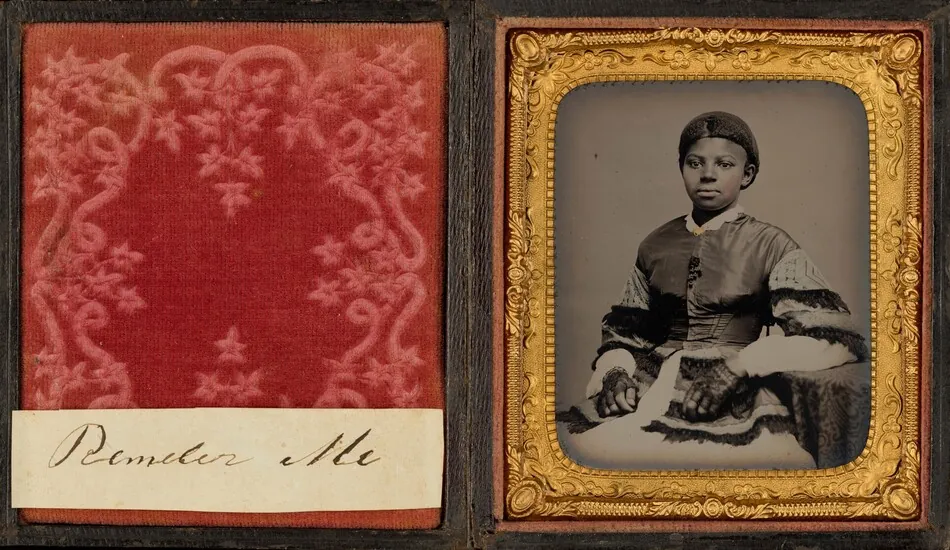
The exhibition brings together some 70 works from the National Gallery's own collection, arranged chronologically across three thematic sections. Much of the show is drawn from a collection the Gallery bought in 2023, the Ross J. Kelbaugh Collection of early American vernacular photographs, and those works are being shown at the museum for the first time since the purchase. The curators are Diane Waggoner, credited by the Gallery as its acting head and curator of photographs, with Katie Cornell and Sarah Greenough. What they have assembled is not a survey of a style. It is a history of a negotiation, conducted in studios, over who would control the portrait.
First, the entrepreneurs
The opening section, Black Entrepreneurs, begins where the medium begins. James Presley Ball, Glenalvin Goodridge and Augustus Washington established thriving portrait studios soon after photography was introduced in the United States in the 1840s and 1850s, and they photographed a wide range of clientele, both white and Black, in the years surrounding the Civil War. The detail the exhibition insists on is a signature. These photographers each chose to credit their portraits with their names, a somewhat unusual practice among daguerreotypists, and in doing so asserted their authorship and the place of Black entrepreneurship inside the struggle for equality and justice. The portrait studio, in their hands, was an incubator: a place of opportunity, and of risk.
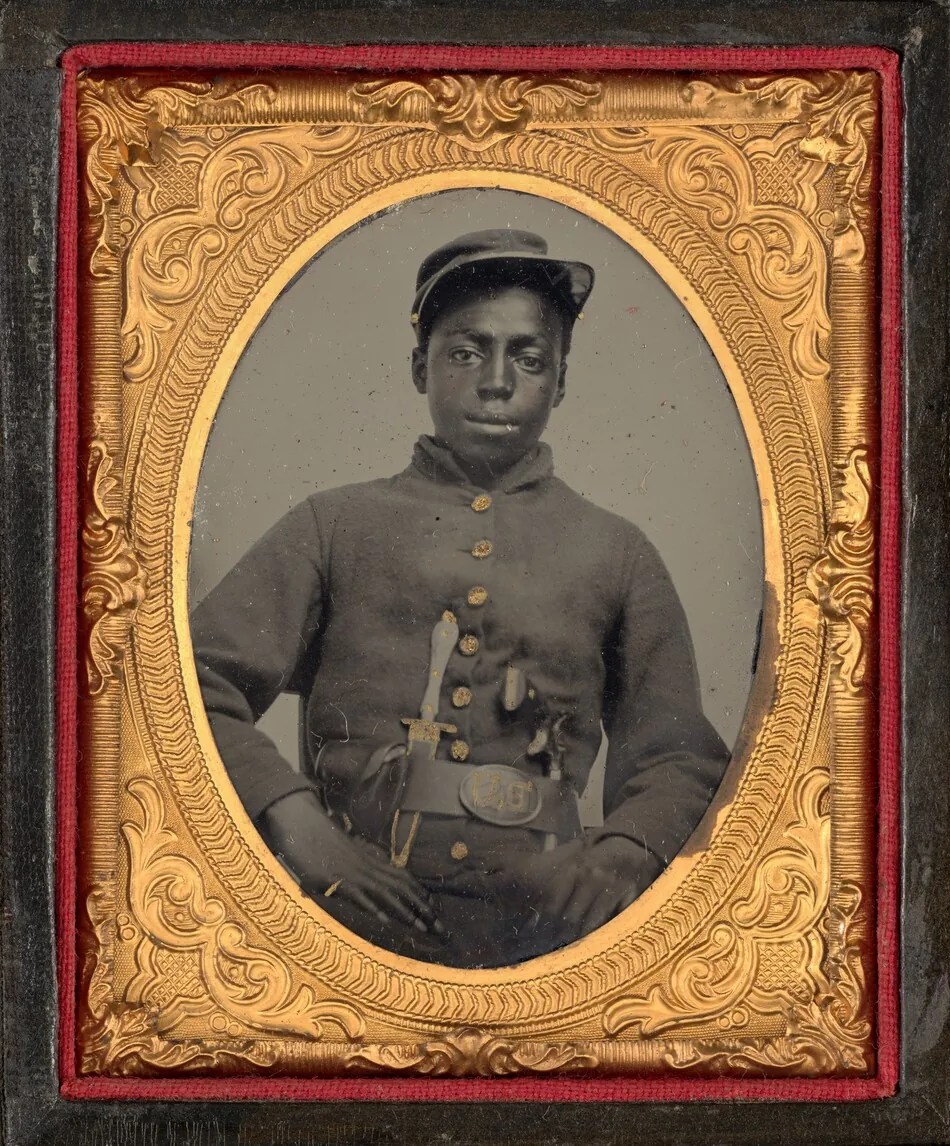
The risk is visible in the second section, Portraits, which turns to depictions of African Americans made in largely white-owned studios in the years before and after the Civil War. Here the same technology that dignified one sitter could be used to exert control over another, and the exhibition is honest about the complexities of agency and consent in portraits of free and enslaved men, women and children. A small ambrotype from around 1863 shows a young soldier in uniform, his cap in the studio manner, the colour touched in by hand, the case ornamented like a jewel. The portrait borrows every convention of the respectable sitting. What the conventions could not guarantee, in 1863, was the future of the man inside them.
Then, the studios of one's own
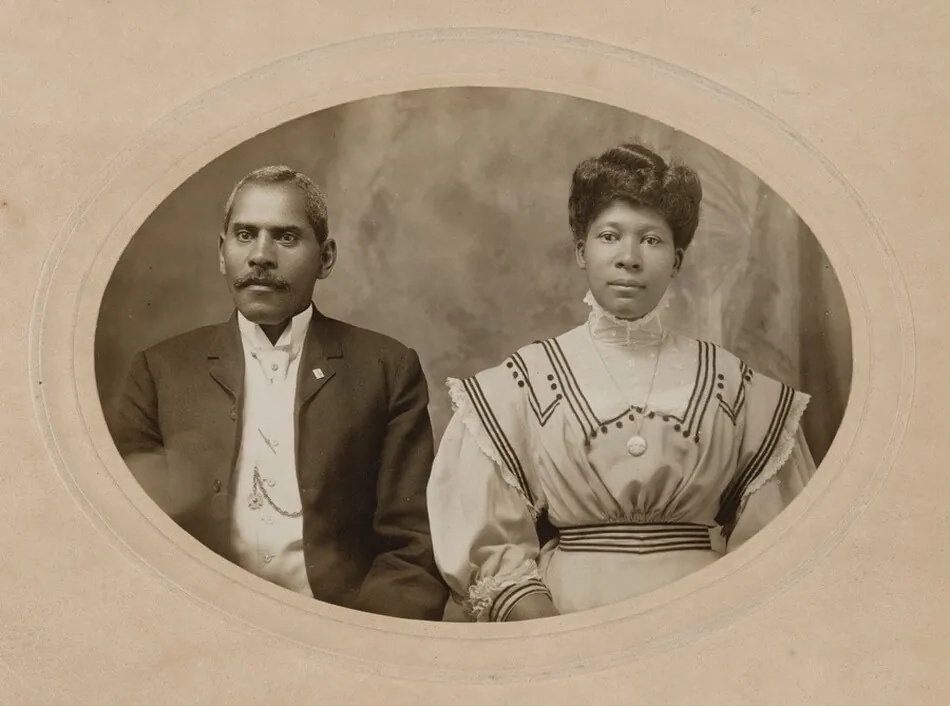
The final section, Studios, opens in the closing decades of the 1800s, when Black photographers were increasingly opening studios of their own, and follows them into the early 1900s, and the pictures change temperature. Addison Scurlock and James Van Der Zee are the renowned names, and they are shown alongside lesser-known artists including G. Addison Turner and Daniel Freeman. Freeman's Portrait of a Man and Woman, from around 1899, is a gelatin silver print of a couple seated close, the man in a dark suit with a watch chain at his waistcoat, the woman in a bodice worked with stripes and stars, a long necklace at her throat. Nothing in the frame is accidental. It is a portrait as a joint claim, two people presenting themselves at the exact pitch of respectability they chose, in a studio where the choice was theirs to make.
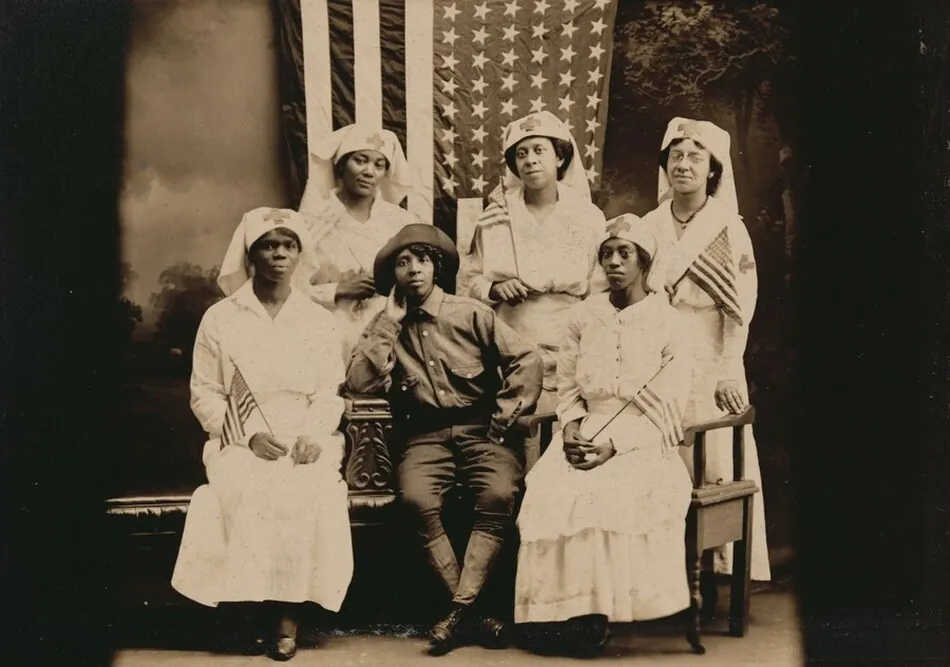
The group portraits extend the claim from the couple to the community. A gelatin silver print from around 1918 shows Red Cross nurses in uniform, three of them holding small American flags, posed before a larger flag with a uniformed man seated at the centre of the group. The exhibition's chronological hang lets a visitor feel the distance travelled between this photograph and the tintype of Annie at the entrance: from a portrait small enough to hide in a hand to a group portrait that takes its place in public, flags and all, expecting to be seen.
Remember Me is organised by the National Gallery of Art and made possible through the leadership support of the Trellis Charitable Fund, with additional support from Nion McEvoy and Leslie Berriman. Admission to the Gallery is always free, which suits an exhibition about who gets to be pictured and on what terms. Its title is an instruction left by a sitter whose full name we do not know, attached to a photograph made by a photographer whose name we do not know either. The museum has done the one thing both of them asked of it. It remembered, in public, at full size, with the dates and the makers it could recover and the honesty to say where the record stops.