Features
One Collector's Eye, Hung as an Argument
Tina Freeman began collecting photographs in earnest in 1969 and built a holding of more than 1,300 works. At the New Orleans Museum of Art, Confluence shows nearly one hundred of them across five galleries, arranged by resemblance rather than chronology, and the hang makes a case for collecting as a form of looking.
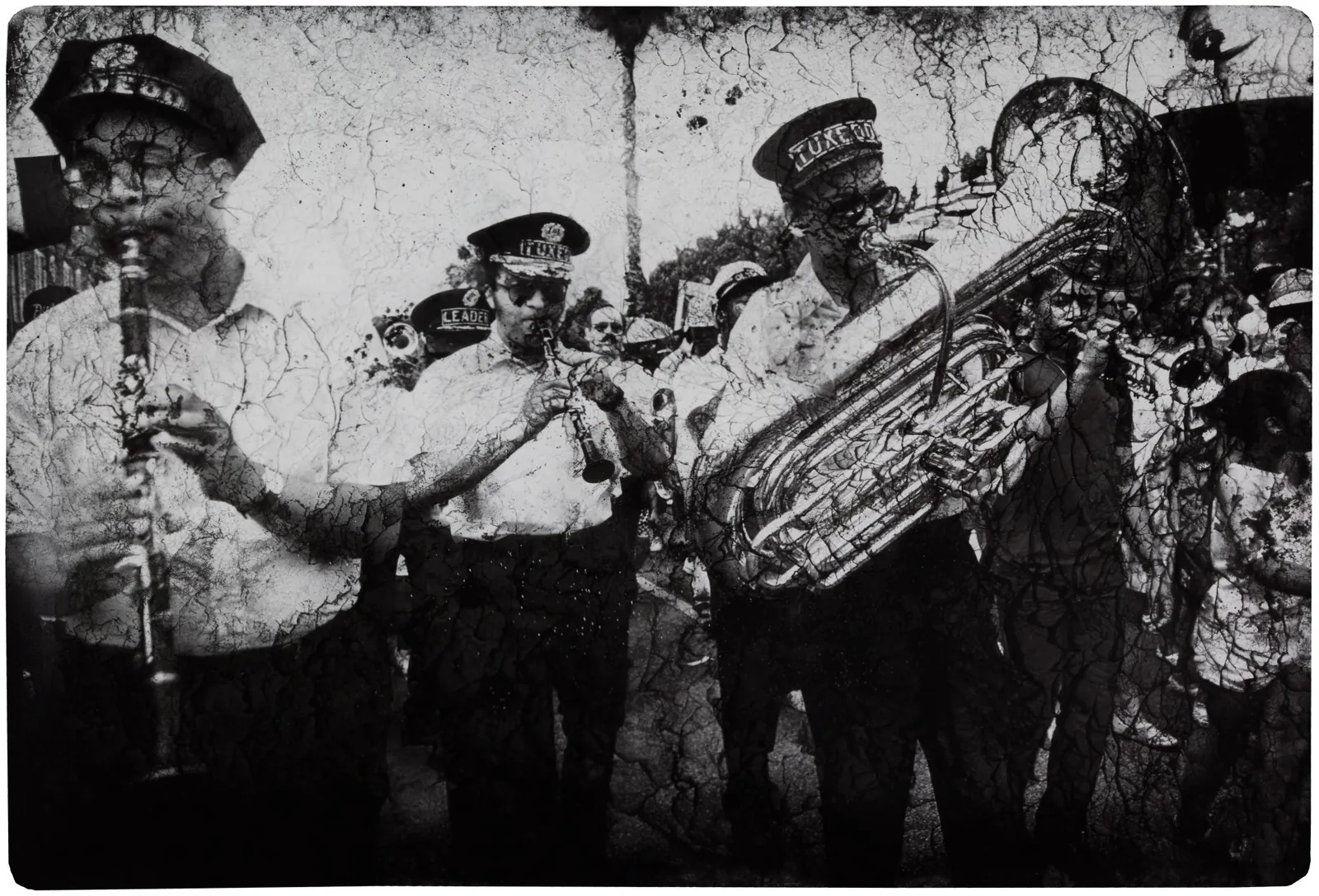
The brass band fills the frame and the print itself seems to be weathering. Musicians in caps lettered Tuxedo play clarinet and tuba at close range, their faces and instruments veined with a cracked, mottled surface that belongs to the photograph's material life, not to the scene. Keith Calhoun made the picture, The Young Tuxedo Brass Band, around 1996. It hangs in Confluence at the New Orleans Museum of Art as evidence of the exhibition's wager: that a collection is an argument, and that the argument is best read in the prints themselves.
Confluence: The Tina Freeman Collection of Photographs opened at NOMA on 20 November 2026 and runs to 4 July 2027. It draws on a promised bequest of more than 1,300 works by more than 270 artists, the biggest single gift of photographs the museum has ever received. Freeman, a photographer herself and formerly the museum's curator of photographs from 1977 to 1982, began collecting in earnest in 1969 and built the holding largely through the 1970s and 1980s. Nearly one hundred photographs are shown, across five gallery spaces, presented together publicly for the first time.
The hang refuses chronology. Works are arranged thematically, with an emphasis on formal similarities between individual photographs, so that a nineteenth century albumen print can answer a contemporary inkjet across the room. Freeman's concentrations steer the groupings: land and seascapes, nude and figure studies, modernism, still life, and a long attention to water and to Louisiana and the American South. The museum is explicit that the selection reflects her gravitation toward lesser known works by significant artists. This is not a trophy hang. It is a portrait of a taste.
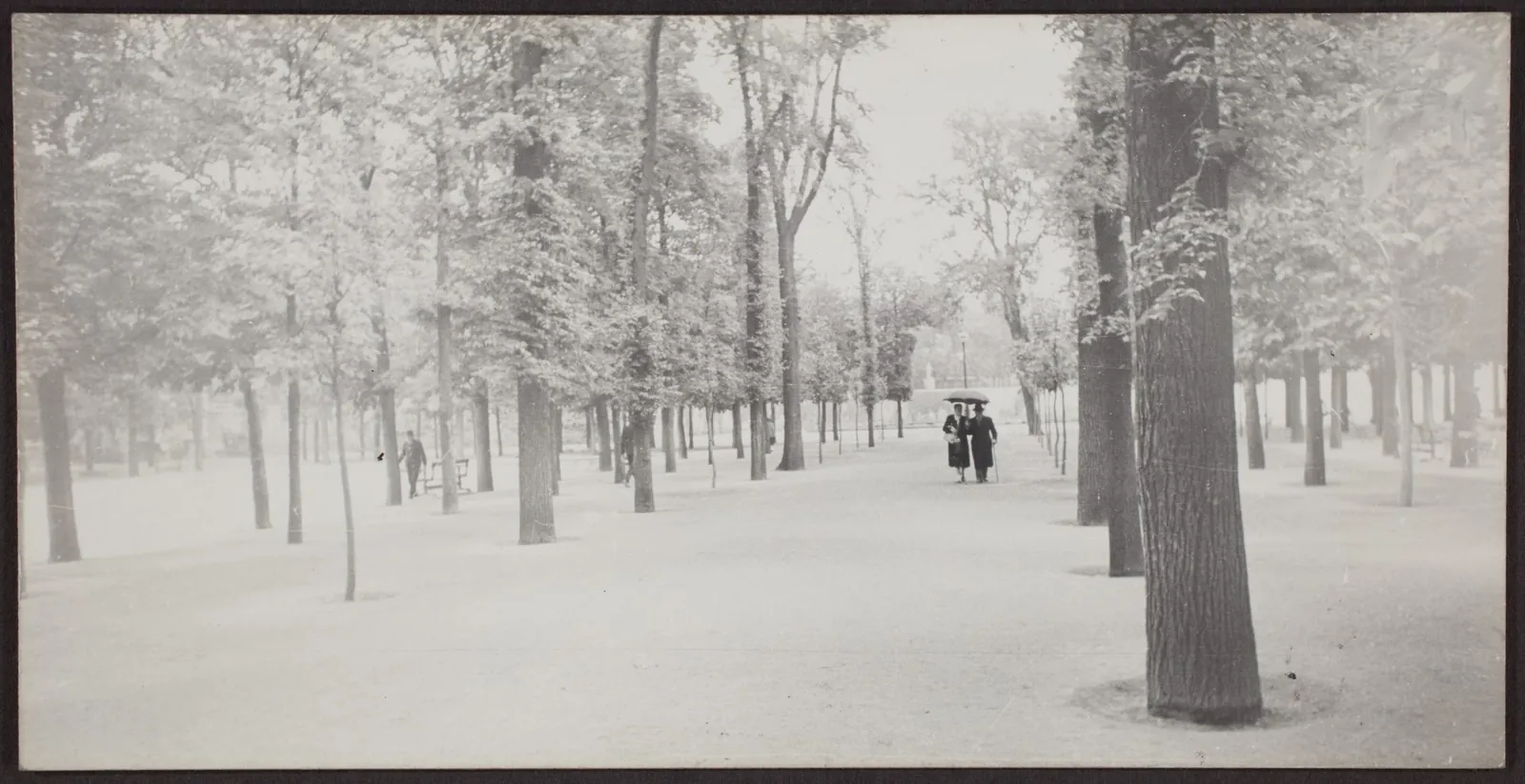
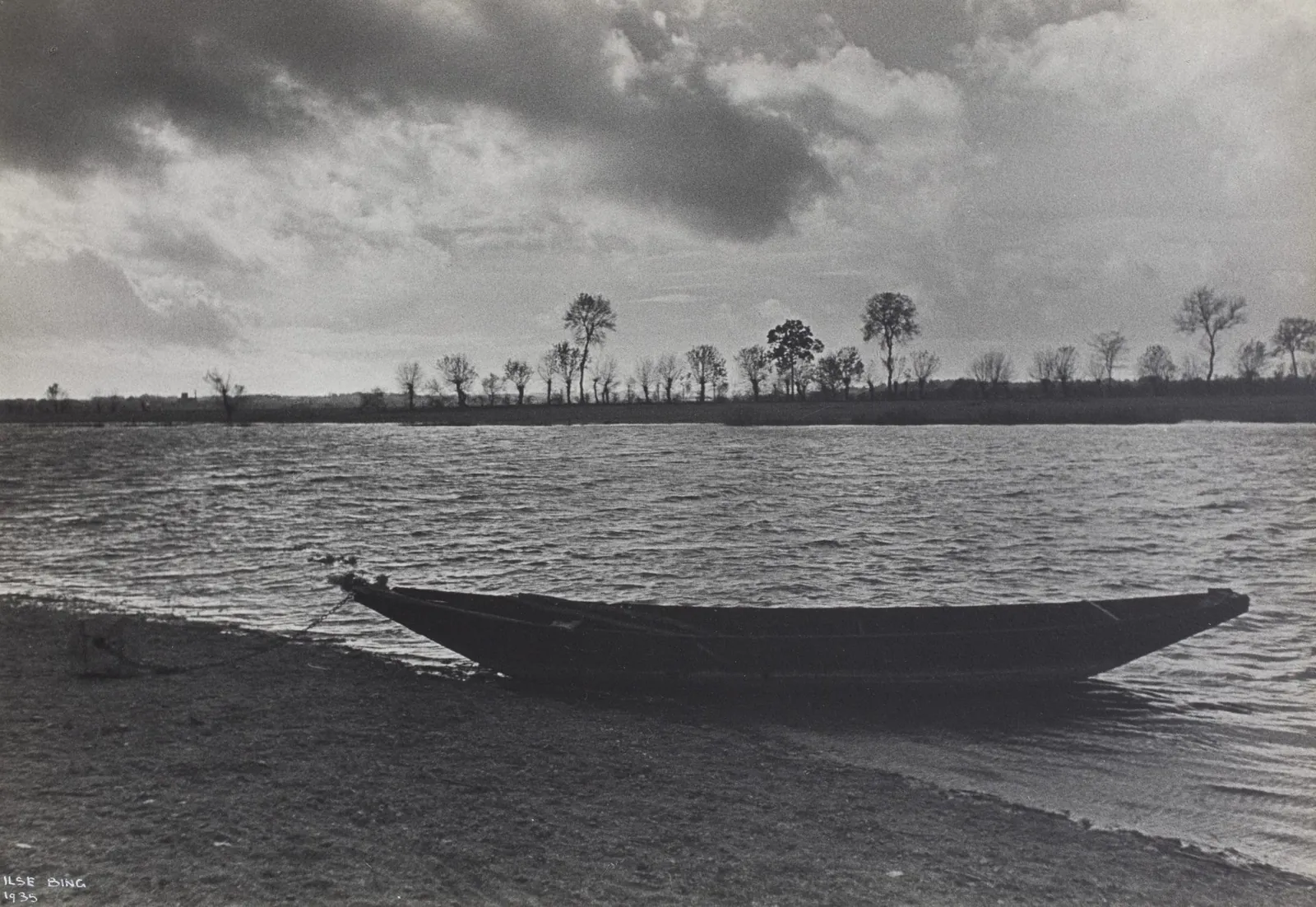
Consider the range the eye is asked to connect. Robert Frank's Speaking of Pictures, Paris, from 1949, is a small gelatin silver panorama, two figures under one umbrella crossing a tree lined park, the whole scene softened to a grey breath. Ilse Bing's riverbank photograph of 1935 sets a dark boat against bright water under a heavy sky, the signature and date written into the corner of the print. Julia Margaret Cameron's My Grandchildren dates to 1868 and measures barely two by four inches. The collection moves between scales like that without apology, because its unit is not the masterpiece. Its unit is the act of noticing.
The processes are part of the show. Albumen prints, gelatin silver prints, a gum platinum print, pigmented inkjet: the exhibition draws attention to the beauty and material qualities of historical and contemporary photographic processes, and the Calhoun brass band, its surface crazed like old varnish, makes the point without a label. A collection assembled by a photographer keeps faith with the object. Freeman bought prints the way printers make them, for what the surface does.
The checklist of named artists reads as a syllabus the collector wrote for herself: George Barnard, Ilse Bing, Manuel Alvarez Bravo, Keith Calhoun, Julia Margaret Cameron, Imogen Cunningham, George Dureau, Robert Frank, Gertrude Kasebier, Clarence John Laughlin, Sally Mann, Lisette Model, Irving Penn, Josephine Sacabo, Alfred Stieglitz, Doris Ulmann, James Van Der Zee, Edward Weston and Piet Zwart, among more than seventy artists in the exhibition. Cunningham's Self-Portrait with Lisette Model, made around 1948, sets two portraitists inside one frame. Weston's Contraband Bayou, Louisiana, photographed in 1941, brings the national canon home to the collector's own landscape.
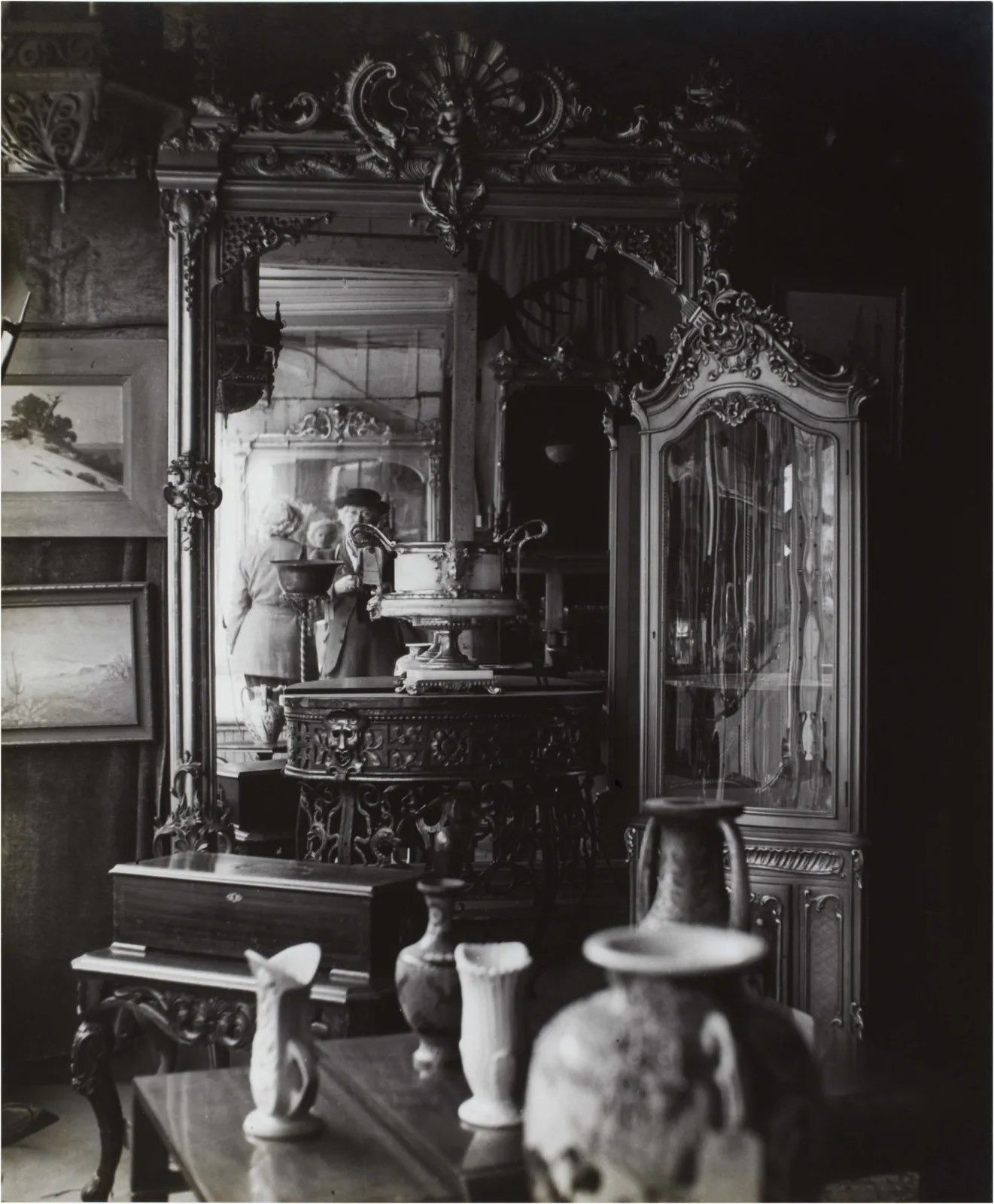
An antique shop interior from the collection, all mirrors and carved wood and reflected figures, might stand as the exhibition's emblem: a room where looking at objects becomes a way of looking at oneself looking. Collecting, at this level, is portraiture by acquisition. What Confluence adds is the public test. Hung by resemblance, the photographs must hold a room without the collector's voice explaining them, and they do, because the resemblances are real: trees rhyming across a century, water answering water, faces arranged by the grammar of their making.
The exhibition is accompanied by a fully illustrated catalogue with 185 full colour reproductions and a detailed checklist of the entire Freeman Collection, available for preorder through the NOMA Museum Shop. In March 2027 the hang will undergo a partial rotation of new works, a second argument drawn from the same holding. That rotation is the honest admission of every large collection show: nearly one hundred prints from more than 1,300 is an excerpt, and the excerpt can be re-cut.
Criticism should end with a verdict, so here it is. Confluence succeeds because it trusts arrangement over narrative. It does not tell the story of photography. It shows one person looking at photography for more than fifty years, and lets the looking accumulate into knowledge. In an age when images arrive without objects, a room full of prints chosen one at a time, for their surfaces as much as their scenes, is a discipline worth travelling to see.