Books
The Wife Inside the Work
John Divola photographed Sheila between 1976 and 1984 and kept most of the portraits out of sight. TBW Books now prints them inside the career they were made alongside, and the sequence argues that the private pictures were never a separate practice.
The cover gives the book away before a page turns. A woman kneels on a bare floor in profile, one arm stretched behind her for balance, inside a room that looks measured rather than lived in. The photograph is printed across the boards of a hardcover object, spine lettered with a surname and a publisher, title set small at the lower corner. It is a portrait doing the work of an introduction, and it was made to be kept, not shown.
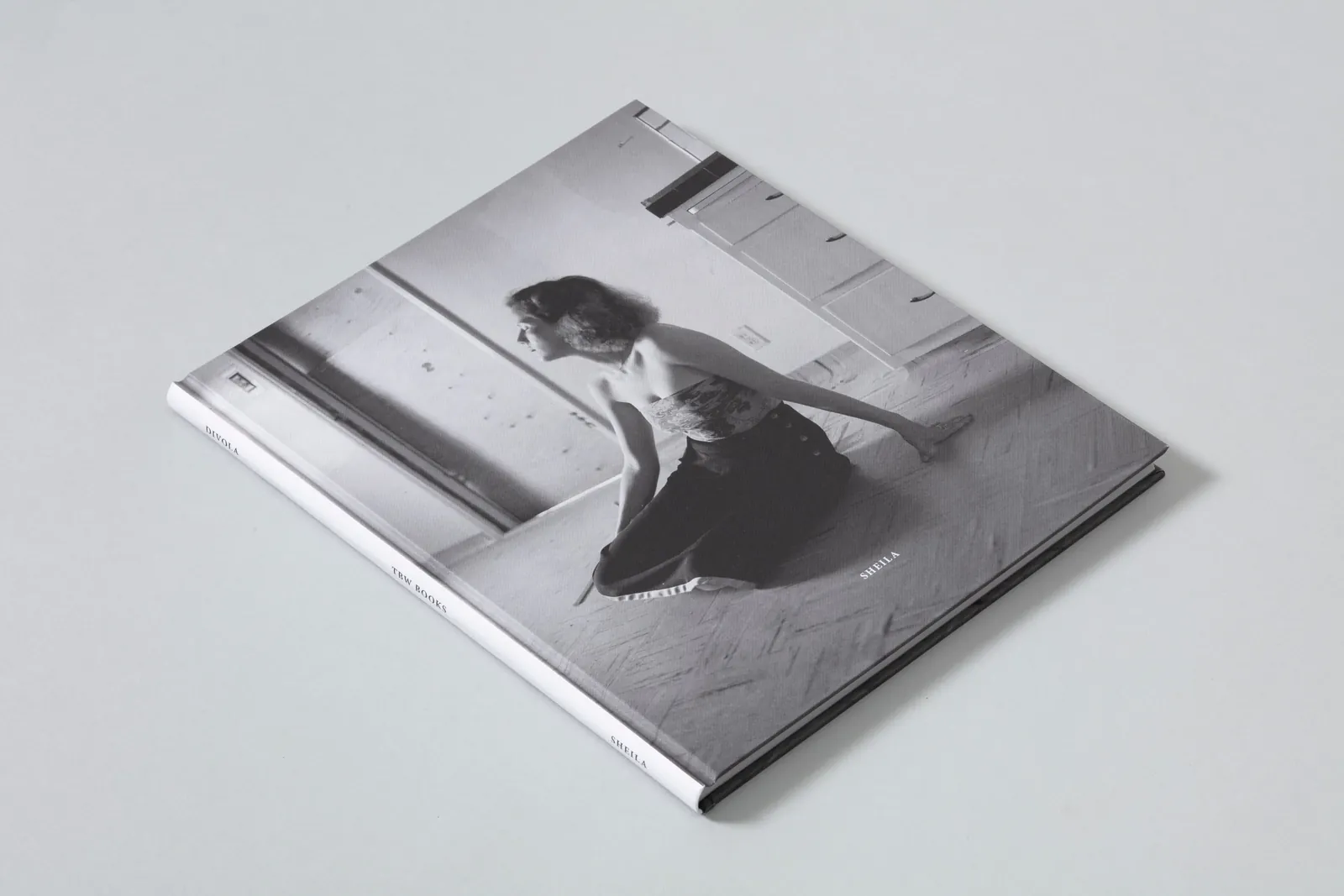
Sheila is a new monograph by John Divola, published by TBW Books. Its subject is the woman Divola was married to at the time, photographed between 1976 and 1984. Most of the portraits were never exhibited, and the publisher is plain that they were never intended to be. That history is the book's tension. A portrait made without an audience carries a different contract from one made for a wall, and printing it four decades later does not cancel the original terms. It asks the reader to hold both facts at once.
The object itself is compact and deliberate: hardcover, 86 pages, 51 plates, measuring 10.5 by 9 inches. The sequencing does the arguing. The portraits of Sheila do not sit in a protected section of their own. Threaded through them, appearing and receding, are frames from the three bodies of work Divola was developing in the same years: Zuma, Vandalism, and the Los Angeles International Airport Noise Abatement Zone series. Those series built his reputation. Here they are asked to share the binding with the pictures that reputation was never based on.
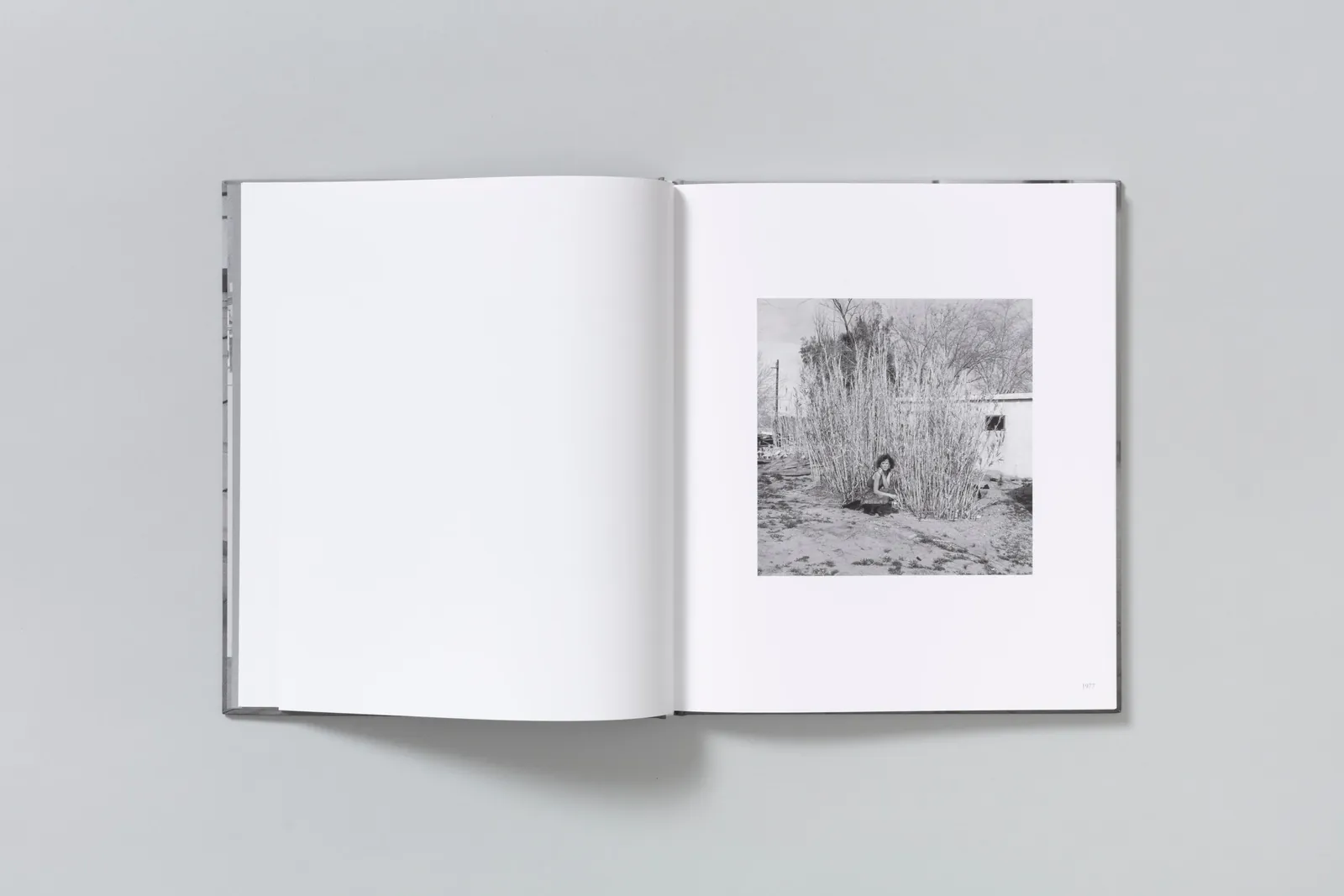
The effect is a correction to how a career gets told. The standard monograph separates the life from the work and prints the work. This one refuses the separation on structural grounds. A 1977 plate shows Sheila small inside a dry landscape, seated before tall reeds, the figure nearly absorbed by the place. The page opposite is blank. The book keeps giving the portraits air, one at a time, and then interrupts them with the conceptual series, as if to say the interruptions ran in both directions while the work was being made.
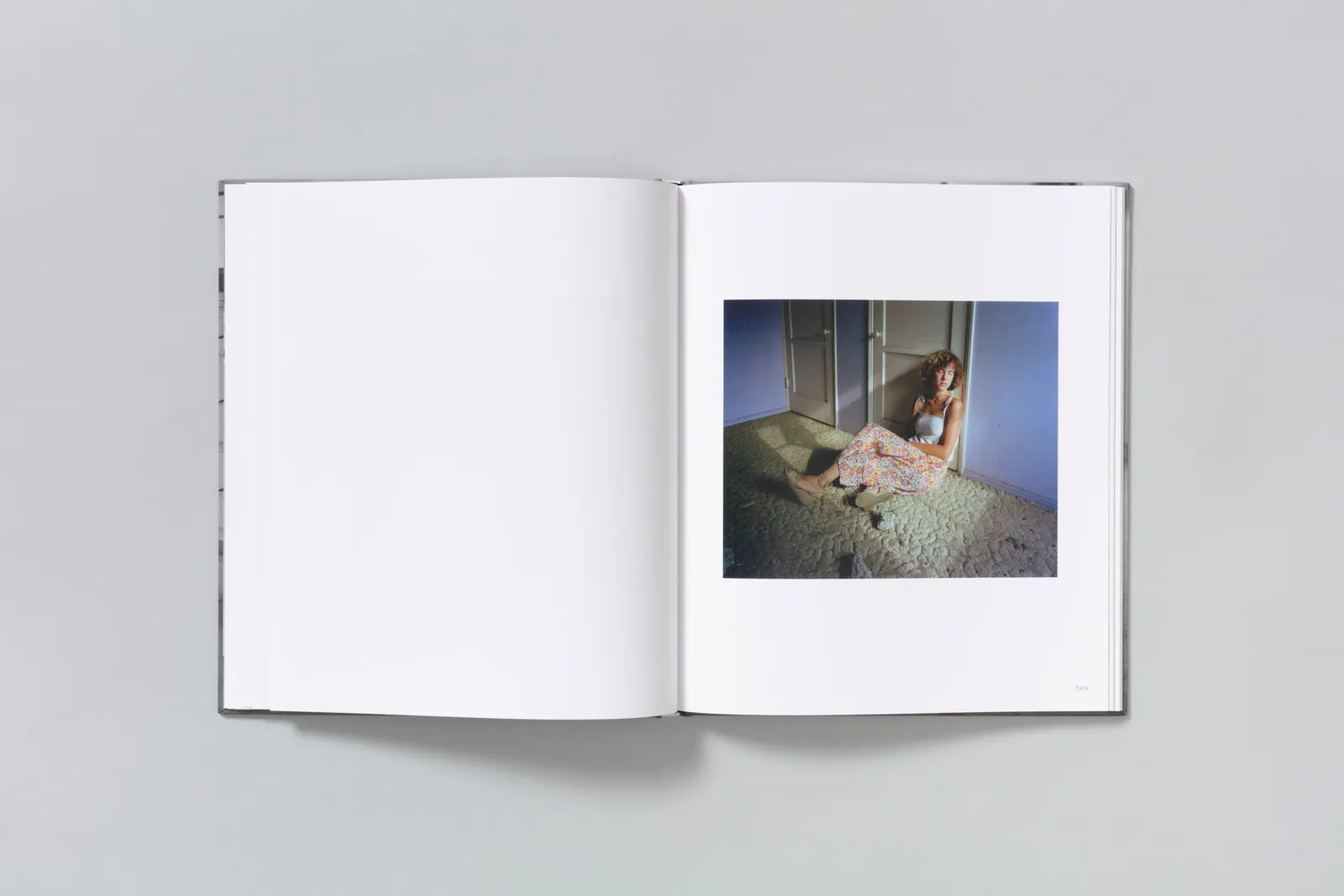
Divola's best known photographs treat houses, rooms and deserted interiors as stages where an action has just happened or is about to. The Sheila portraits use the same stages with a person inside them, and the person changes the temperature of the device. In a colour plate dated 1978, she sits on the carpet of an emptied room in a floral skirt, eyes lowered, the light falling hard across the floor. The room is recognisably a Divola room. The sitting is recognisably not a prop.
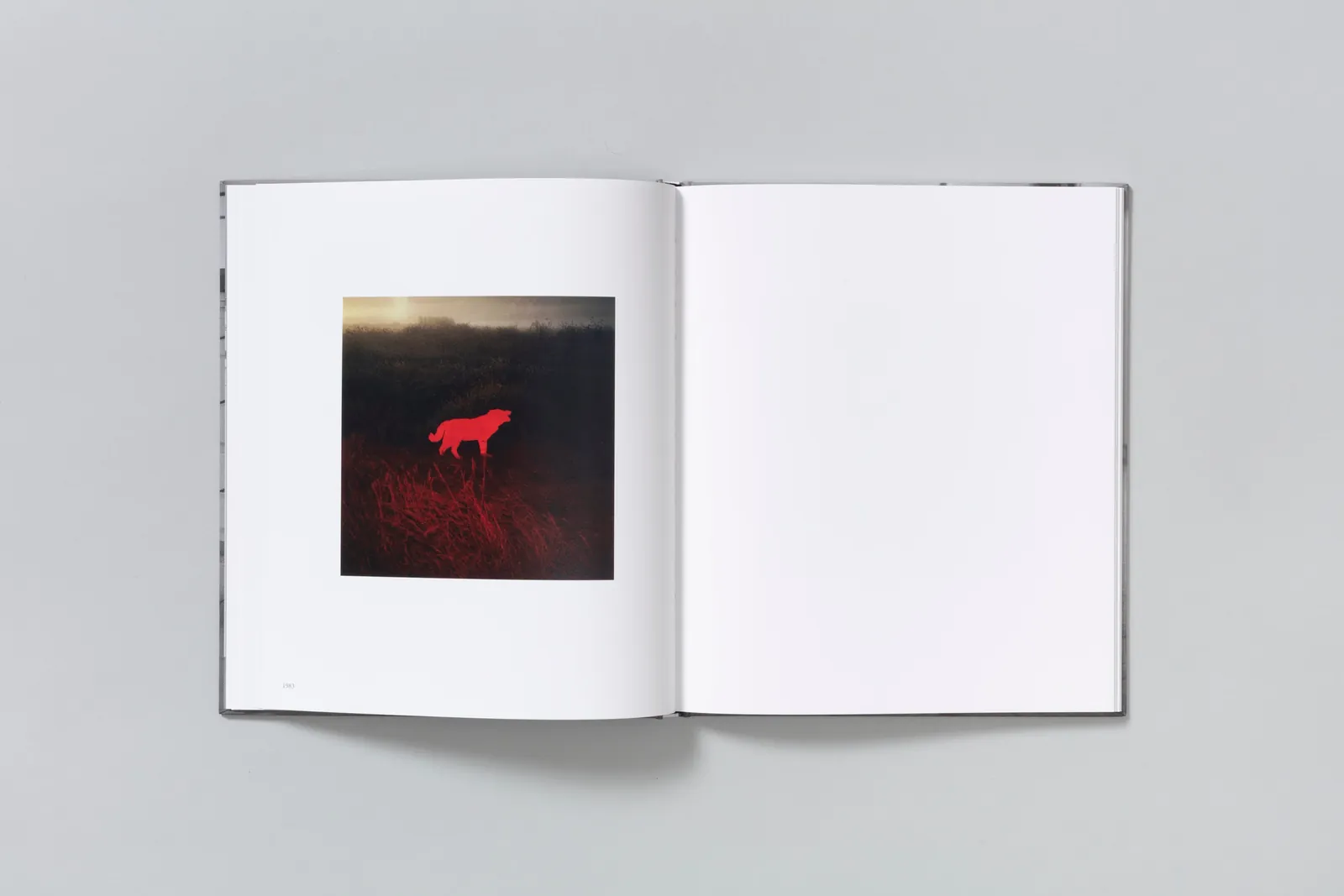
Late in the book the balance tips the other way. A 1983 plate shows a canine rendered as a flat red silhouette against dark brush, an image from the world of the staged series, all device and no intimacy. Another plate answers it with a figure half lost inside red lit branches, the body dissolved into the thicket. Placed near the portraits, these pictures stop reading as exercises. They read as the other half of a single attention, one half pointed at a person, the other at the places persons leave.
The book arrives with an exhibition. Gallery Luisotti in Los Angeles presents Sheila from 7 November 2026 to 9 January 2027, the artist's fifth solo exhibition with the gallery, shown in conjunction with the TBW volume. The pairing matters. On a gallery wall, the portraits must survive as public objects. In the book, they keep the protection of sequence, paper and turning pages. The same pictures, two kinds of exposure, and the difference between them is the subject Divola has been circling since the seventies: what a photograph does to the thing it keeps.
Divola was born in Los Angeles in 1949, took his BA at California State University, Northridge in 1971 and his MFA at UCLA in 1974. The Sheila years begin two years after the MFA, which makes this book, among other things, a record of a formation. The conceptual series look different once their maker's domestic life is printed inside them. They look less like systems and more like habits of seeing, practised at home and in empty houses alike.
As an object, Sheila earns its place in the Books pages on design as much as content. The plates sit one to a spread against generous white, the year printed small at the page foot, the cover portrait carried across the boards without a jacket to protect it. It is a book about entanglement that is itself entangled, image and object refusing to come apart. That is the right form for its argument, and it is why the private pictures hold their own against the famous ones. They were never the lesser work. They were the withheld work, and withholding, it turns out, was a kind of sequencing all along.