Craft
The Room That Is a Camera
Penn's studio had no windows, one direction of light, and a corner built from two flats: walk inside his rooms and you can identify the photographer blind.
Stand Truman Capote in the corner and watch what the room does to him. It is 1948, and the corner is not a corner: it is two studio flats wedged together into a narrow V, built for the occasion in Irving Penn's New York studio. Capote leans into the angle, hands in his pockets, eyes direct, the walls closing in on both sides. The photograph is famous, but the famous thing is not the sitter. It is the architecture. Penn built a room with no exit and put a person in it, and the person, denied every escape, gave him a face no candid could have found.
Between 1946 and 1948, Penn photographed artists, writers, dancers, and musicians inside these constructed corners: Capote and Marcel Duchamp in 1948, Salvador Dali in 1947, Georgia O'Keeffe, Spencer Tracy, Jerome Robbins, a generation of cultural luminaries posed inside utterly minimal sets. He called them his corner portraits, and the set was brutally simple. Two stage walls, pushed together. Step inside. The corner did the directing. Tracy leans jauntily against the walls, making the confinement look like a choice. O'Keeffe stands straight-armed and simmers in it, making it look like a sentence. As the Metropolitan Museum's Jeff Rosenheim has said of these pictures, "We can feel the pressure of the space." The portraits hold the light and push the personality forward, because there is nowhere else for the personality to go.
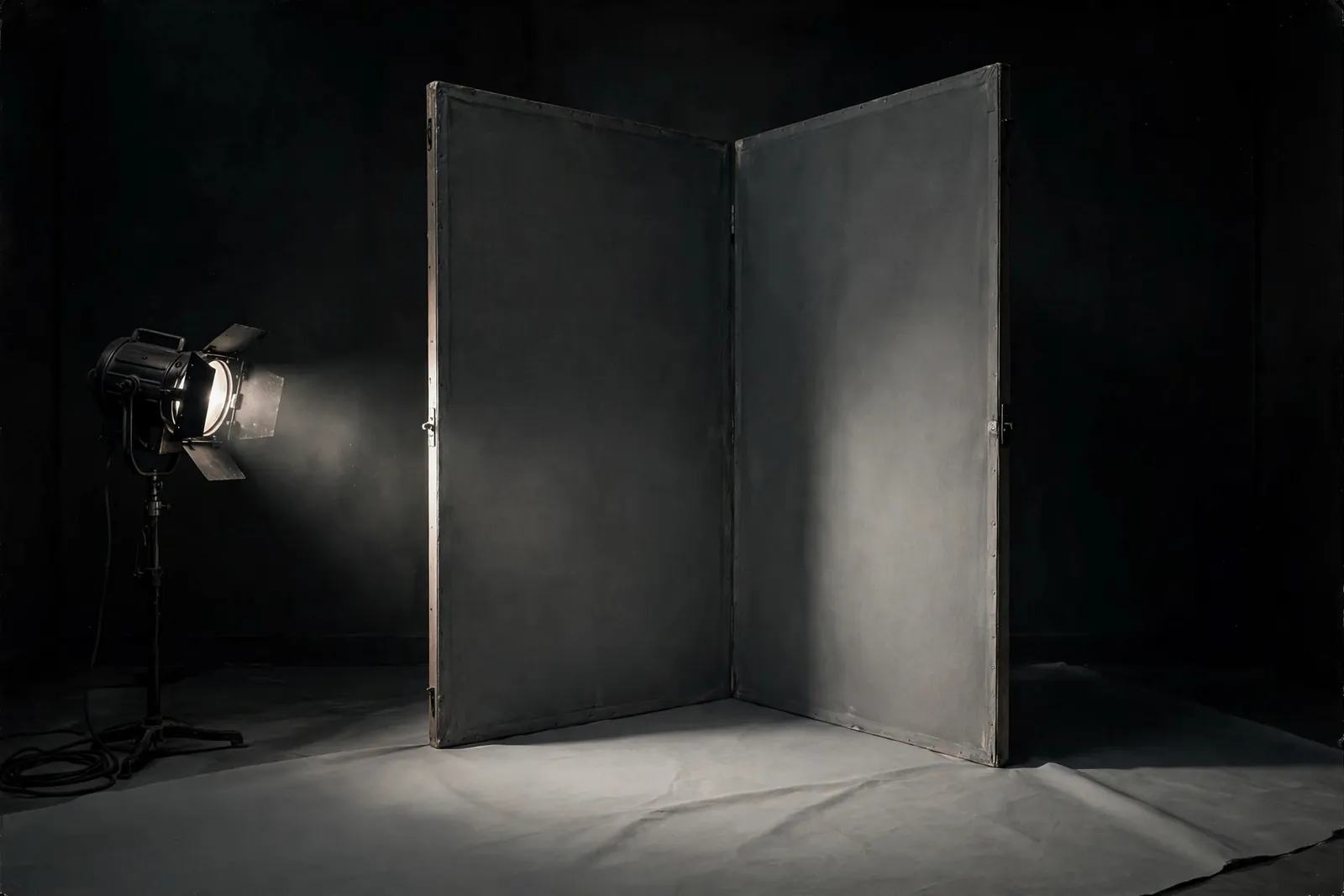
This is the thesis of the room as camera: the studio is not where the photograph happens. The studio is the photograph, built at full scale, and the camera is just the part that records it. Penn understood this more completely than any fashion photographer before or since. His New York studio was windowless by design, lit by a couple of spotlights turned in one direction under his working motto that there is only one sun. The seamless paper swept down and erased the horizon. The corner of flats erased the exits. Walk into that room and the light could only do one thing, the background could only be one thing, and the sitter could only be themselves, cornered. The architecture made the decisions before the shutter did.
Photographers talk about style as something in the eye or the hand. Penn's style was in the floor plan. You could identify his pictures blind, not by the camera he used but by the room he built, because the room decided what the light was allowed to do. The single source, the dark walls, the paper sweep: these are not styling choices. They are load-bearing walls. Change any of them and the Penn picture collapses, which is why his imitators, copying the look with softboxes and gray seamless, so often miss the thing itself. They are copying the photograph of the room. He built the room.
The corner portraits lasted only two years, but the principle never left the studio. Penn kept rebuilding his instrument for the rest of his career. In 1967 he constructed a travelling studio, a portable version of his controlled conditions that could be taken on the road for his ethnographic portrait essays. The logic is exact: if the room is the camera, then the camera should travel. A portrait made far from New York still carried the signature of the room, because the room came along. Photographers speak of finding their light; Penn packed his.
Consider what the room asks of the sitter, because the studio is also a business and the sitter is the client of the experience. A big daylight loft flatters: it is airy, it is Paris, the light is kind and the coffee is good. Penn's room interrogated. No windows, one hard source, two walls closing in. The sitters who thrived there, and the list of names suggests most of them did, were people accustomed to being looked at and unaccustomed to being cornered. The room removed the performance of ease and replaced it with the performance of endurance, and endurance photographs more honestly than ease. This is set design as psychology, and it worked because it was honest about what it was doing. The corner never pretended to be a candid.
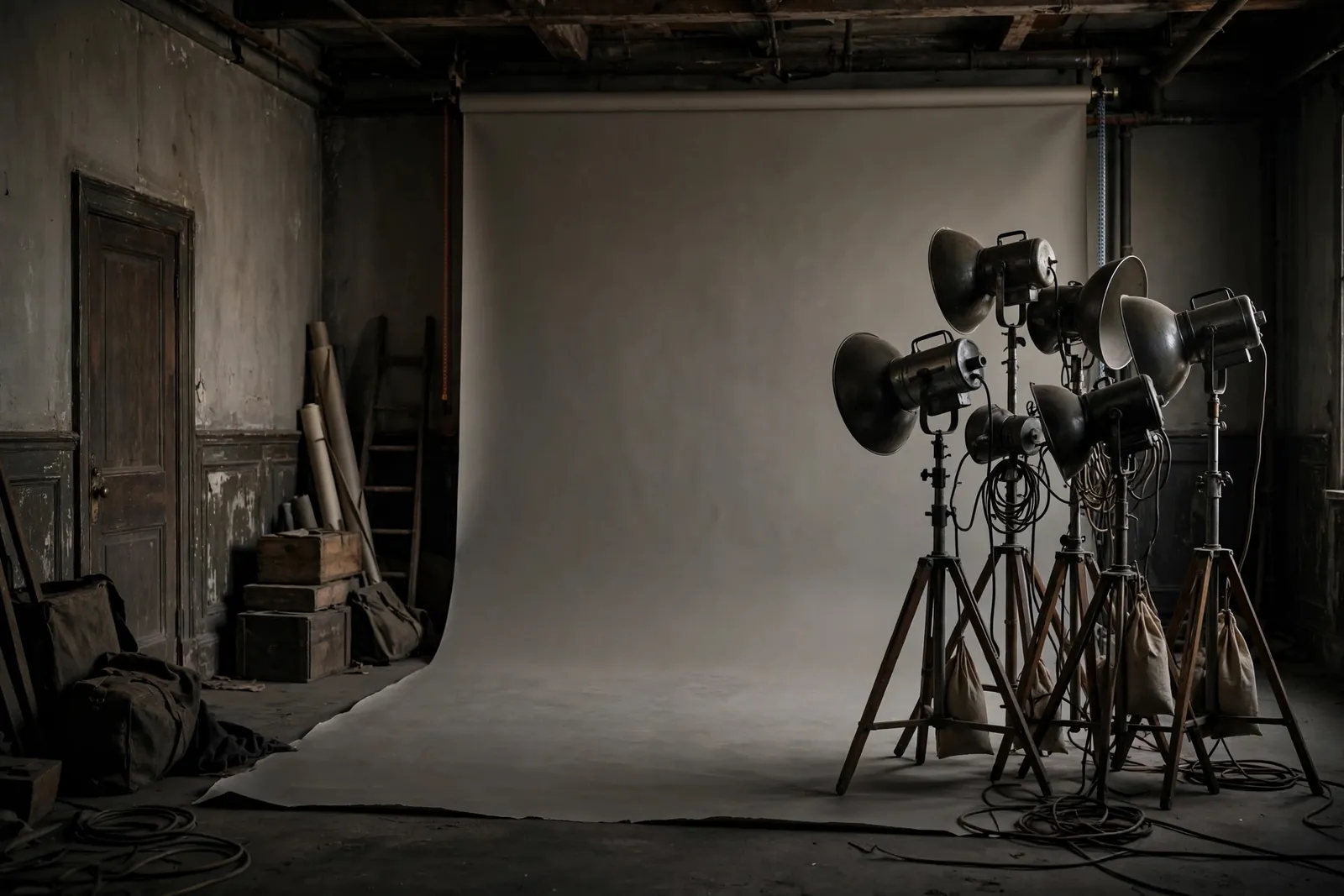
There is a counter-tradition, and it deserves its due. The daylight studios of Paris, the great north-facing lofts, are rooms that do the opposite: instead of manufacturing the sun, they trap it. The photographer who works in north light has also built an instrument, just a more negotiable one; the season, the hour, and the cloud all get a vote. Paolo Roversi's pared-down Paris studio, a small room he has worked in for decades, is the far end of that tradition: a room so simple it disappears, leaving only the softness of the light it admits. Put Penn's room and Roversi's room side by side and you have the two poles of the studio as instrument. One builds the weather. The other waits for it, beautifully.
But notice that both are instruments, and both are signatures. You can identify Roversi blind too, by the softness that only that room makes. The argument of this piece is not that Penn's way is the right way. It is that every serious fashion photographer has a room the way a violinist has a violin: an object with opinions, maintained over years, that shapes everything played on it. The photographers who rent anonymous white boxes and light them differently every day are choosing not to have an instrument. That is a choice too, and their pictures show it: competent, various, and forgettable in the way of music played on a rented piano.
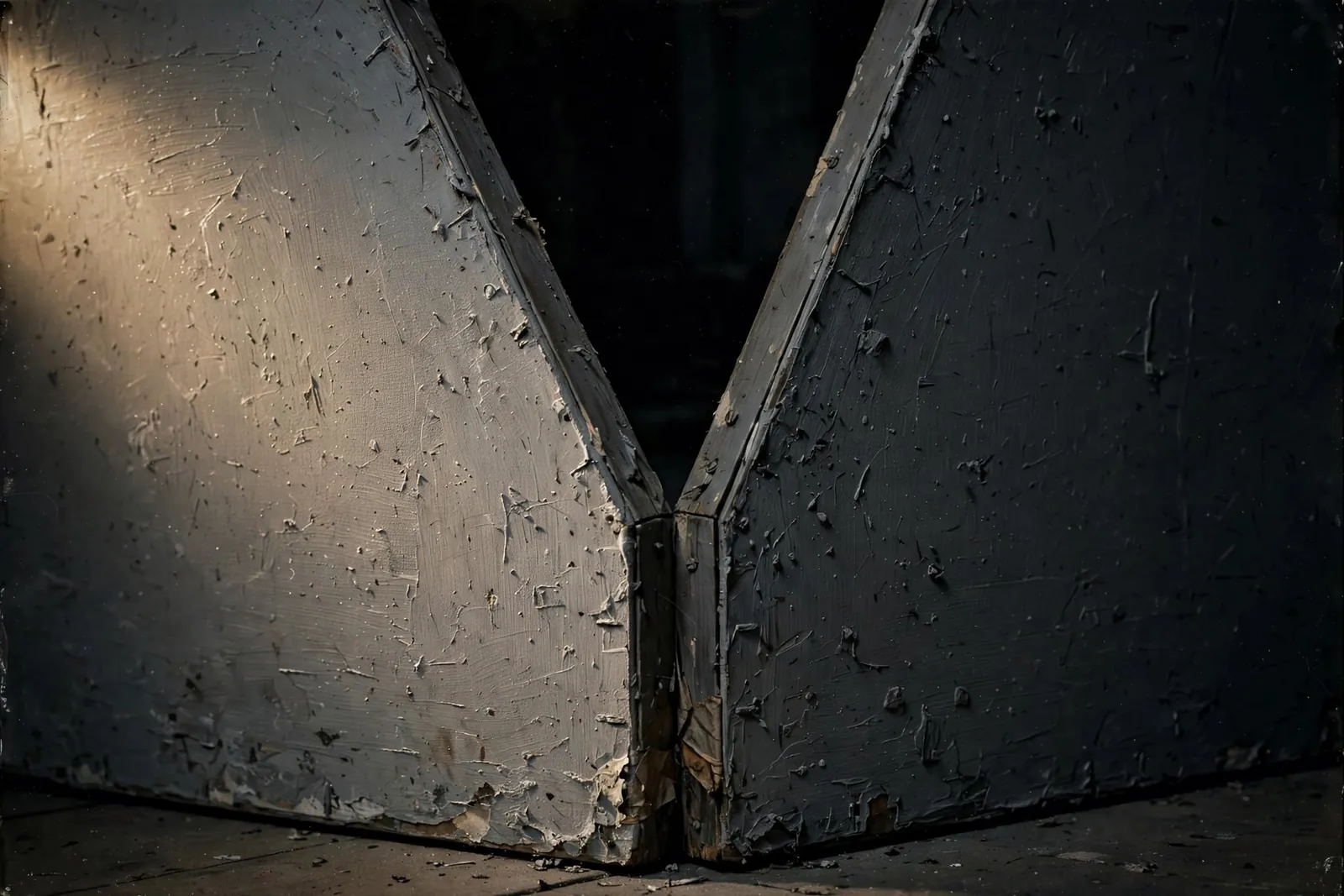
The room decides what the light is allowed to do, and the light decides what the face is allowed to be. Penn's corner, his windowless box, his travelling studio: three versions of the same conviction, that the photograph begins in architecture and ends in chemistry, and the camera is the brief mechanical moment between them. Stand in the V of two flats and feel the pressure of the space. That pressure is the picture. Everything else, the lens, the film, the print, is just the room being remembered.