Criticism
The Honest Fiction
Sarah Moon says her photographs are fiction. That makes them the truest pictures in fashion.
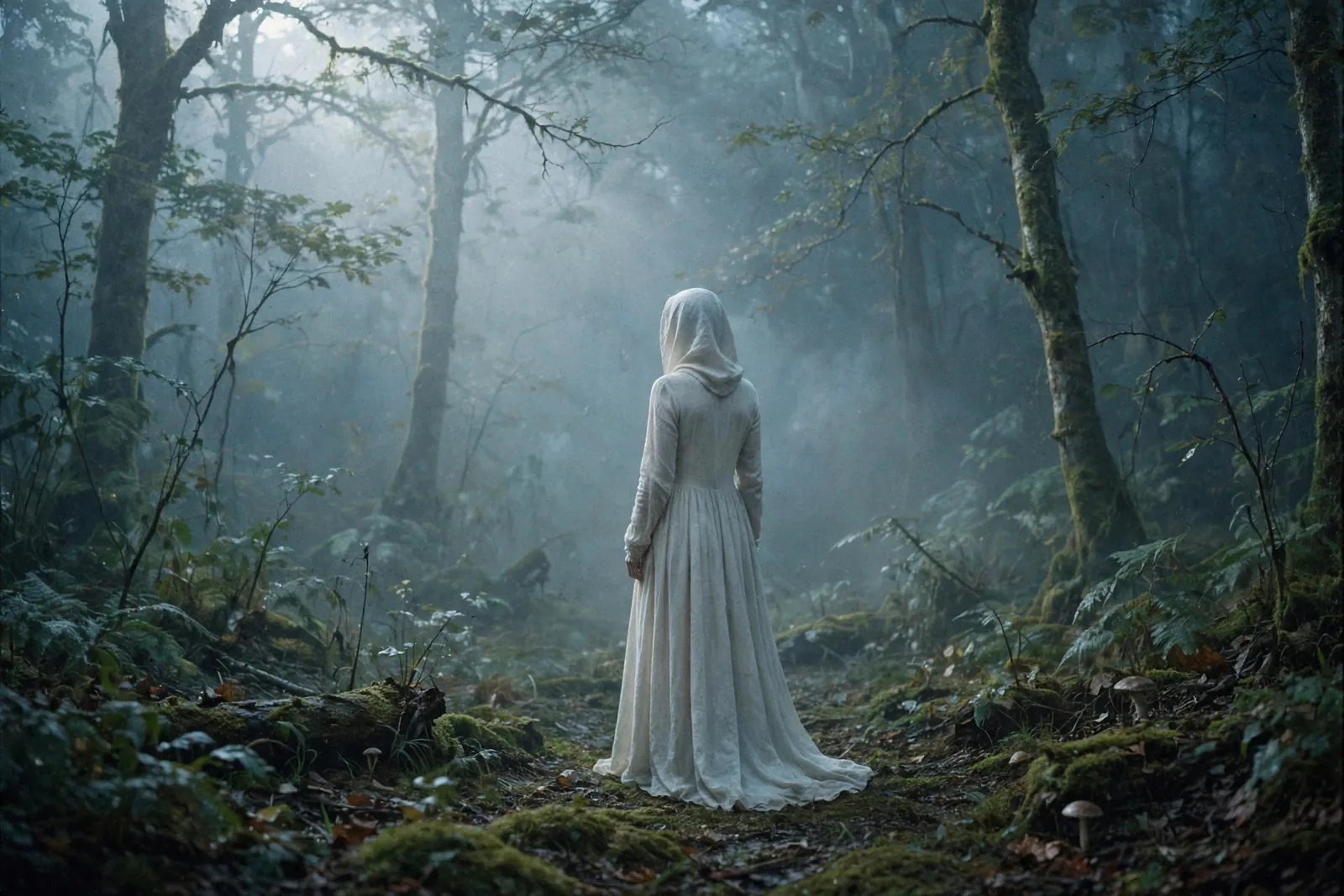
Start with the grain. In a Sarah Moon photograph, the grain arrives before the subject does. The edges give way first. A dress is a smudge of deep red; a face is half surrendered to softness; the background has the texture of a memory being handled too often. Nothing in the frame is trying to convince you that it happened. Everything in the frame is trying to convince you that it felt like something.
Moon has said it herself, plainly, and the plainness is the point. She has called her photographs fiction, not statements, in interview after interview across fifty years: work meant to express rather than to define. The method matches the label. She builds each image from an invented situation, removes whatever would situate it, and works the light until the real gives way.
Consider what that statement does to the contract of fashion imagery. The standard fashion photograph sells real garments through unreal pictures. The dress is real; the woman wearing it is lit, retouched, art-directed, and composited into something no human has ever looked like at breakfast. The industry's fiction is hidden inside a performance of fact: the skin is perfect, the light is impossible, and the whole apparatus insists you are looking at something that exists. The garment must be believed. Everything around it is permitted to lie, as long as the lie is seamless.
Moon reverses the polarity. She declares the fiction up front, in the grain itself, so that what you believe is the mood. Her pictures ask to be believed as feelings rather than facts, and the honesty of that admission changes what the photograph can do. A sharp lie is still a lie. A declared fiction cannot lie about being one.
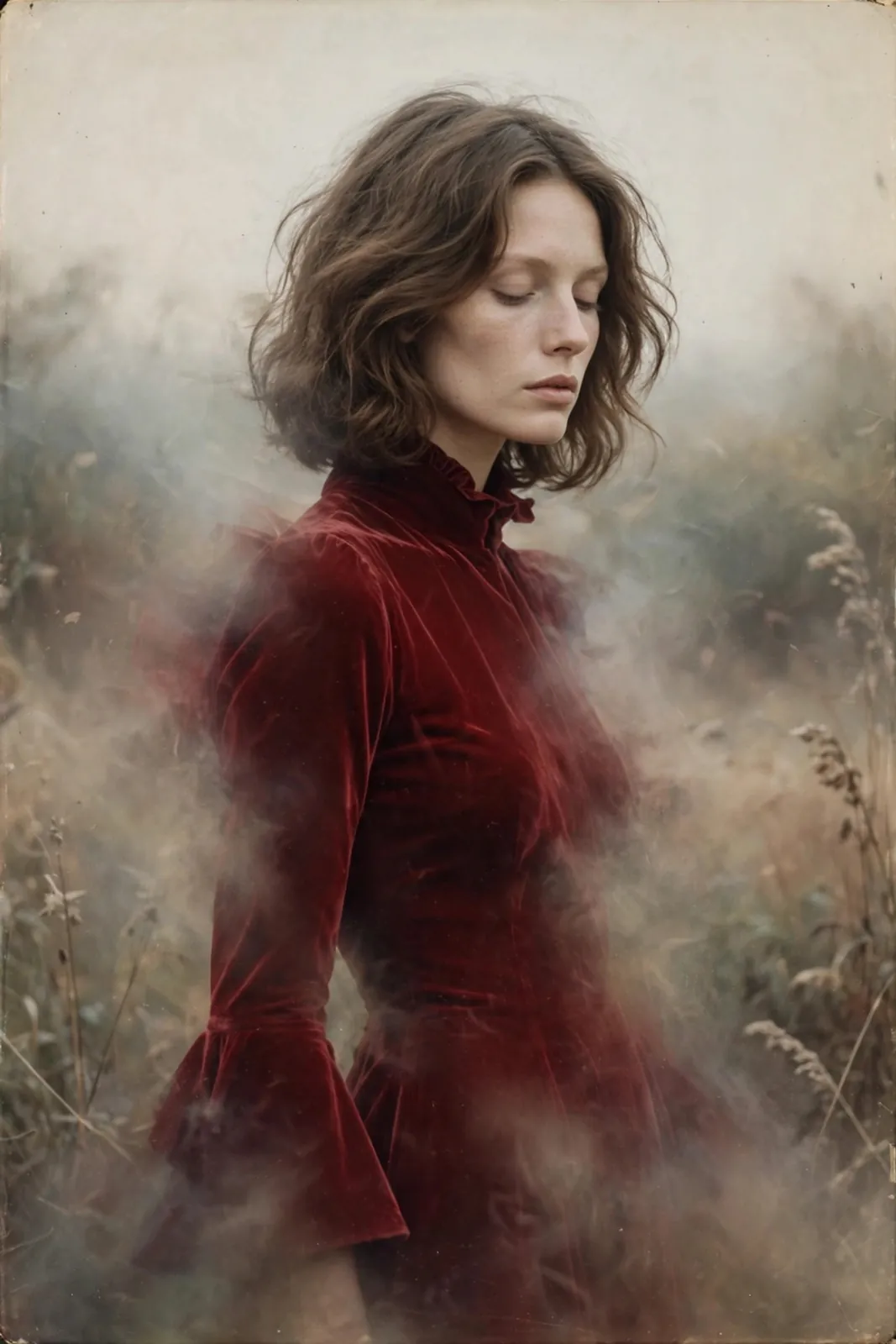
The biography is part of the argument. Moon was born Marielle Warin in Vernon, France, in 1941, and came to photography sideways, through modeling. She rose in the 1970s, shooting for Biba and Cacharel, for Chanel and Dior, for Vogue, and in 1972 she became the first woman to photograph the Pirelli calendar, the corporate commission that had quietly become one of photography's most prestigious stages. Her entry was soft-focus, grainy, painterly: commerce had accidentally funded art, and the art did not bother to disguise itself as commerce.
She came to the camera from the other side of it. As Marielle Warin she had modeled, and she has described the turn plainly: she began photographing her friends' models, was asked to do it for a magazine, and became involved and interested. The model's knowledge never left the work. Her sitters are not directed into poses; they are watched into moods.
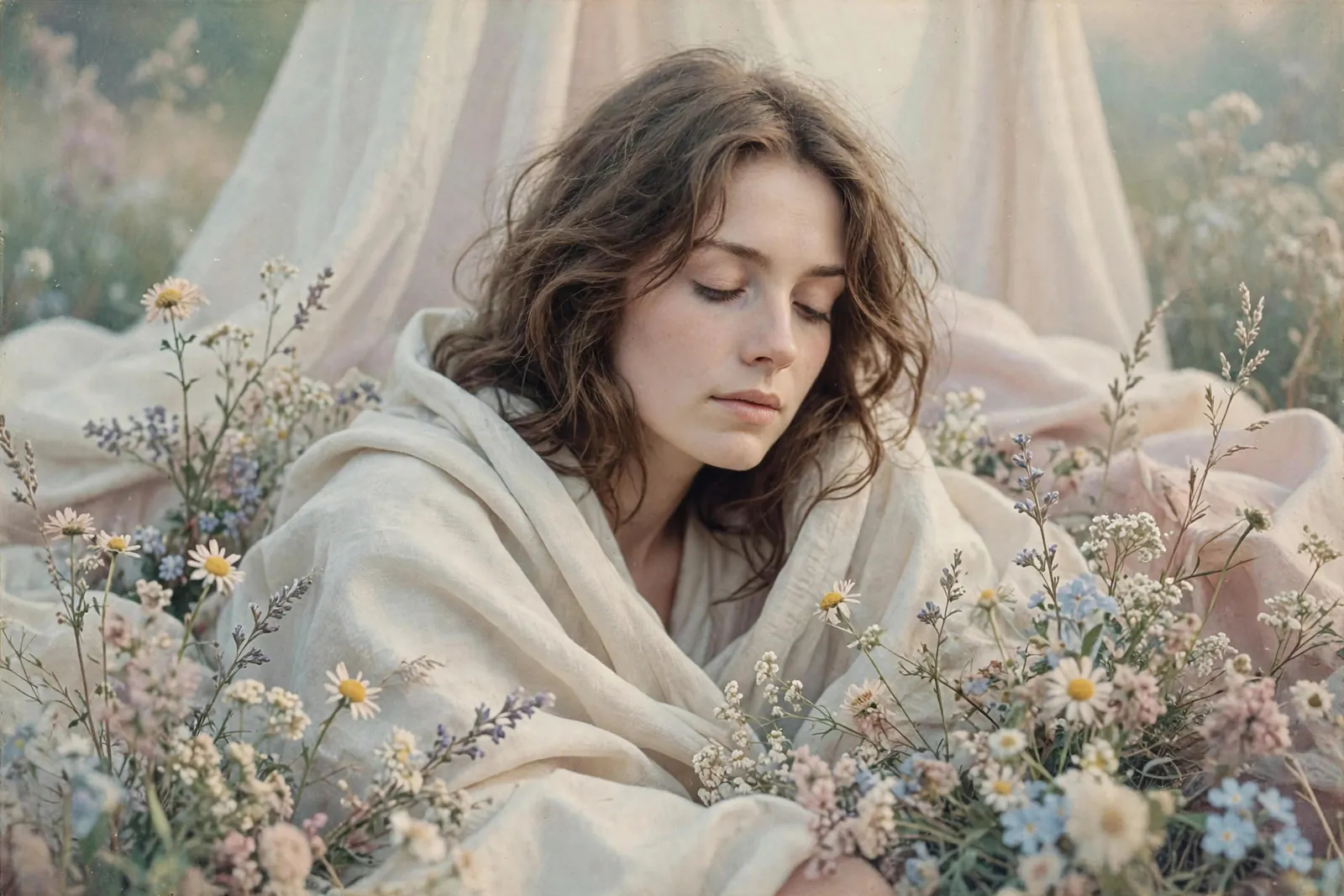
From 1985 onward, she turned largely to personal work, including short films drawn from fantasy and fairy tales. The commissions receded; the method did not change. Whether the subject was a couture gown or a folk tale, the procedure stayed the same: erase what situates the image, make it nowhere or everywhere, and wait for the feeling to arrive. In 2018, her work filled the Armani Silos in Milan, a temple of industrial minimalism given over to blur and smudge and dream. The architecture was exact. The photographs were not, and the room was better for it.
The erasure is the method: remove the markers of place and time, make the image nowhere or everywhere, and what remains is the feeling, which turns out to be the most portable thing in the picture. Avedon's white paper, in the same era, had removed place to force the documentary question. Moon removes place to refuse the documentary question entirely. The two projects rhyme across the same era, by two photographers who understood that a background is never just a background.
This is where the criticism has to be precise, because Moon's position is easy to sentimentalize and she does not deserve the sentimentality. Her fiction is not an escape from craft. It is craft with the document refused. The grain in a Moon print is not an accident the image survived; it is a declared intervention, as deliberate as any lighting diagram. She works the surface the way a fashion photographer works a set: she builds the unreality on purpose, in front of you, and signs it with softness.
And that is the verdict. Fashion photography is fiction that usually pretends otherwise. The advertising image claims the authority of the document while practicing the methods of the dream, and the pretense is the whole business model: believe the woman, buy the dress. Moon's honesty about artifice is more truthful than everyone else's realism, because she tells you where the invention is. She charges the image with feeling and admits the charge. The feeling, once admitted, becomes the one fact in the frame you can trust.
There is a harder question underneath, and Moon's work asks it without flinching. If the declared fiction is the honest one, what does that make the hidden kind? The campaign that presents its construction as candor, the editorial that sells spontaneity by the shot list, the entire apparatus of manufactured authenticity that fashion now runs on: these are fictions that refuse the name. Moon took the name half a century ago. She called her photographs what they are, and in doing so she made the only kind of fashion image that cannot be accused of deception. It told you first.
The fairy tales came later, and they were not a departure. From 1985 on, Moon made short films drawn from fantasy and folk tales, and the still photographs of the period carry the same procedure: a story made up and left untold, a situation imagined that does not exist, the light shifted until the real surrenders. The commissions had taught her the apparatus. The personal work kept the apparatus and dismissed the client. What remained, in both, was the declared fiction, which is why the late work and the early fashion work read as one continuous argument.
The mainstream she worked against is worth naming. The 1970s fashion image was, for the most part, sharp, glossy, and certain: the studio seamless, the strobe, the perfected surface. Moon's softness was not a failure to meet that standard. It was a refusal of it, executed with complete technical control. The grain, the blur, the drained color: these are not accidents. They are the lighting diagram of a photographer who decided that certainty was the lie and uncertainty the honest position. That is why the work has outlasted the era's sharper pictures. The sharp ones told you what to buy. Hers told you what it felt like, and feelings do not go out of season.
Look at the grain again. It is still arriving before the subject. That is not a failure of focus. It is a statement of terms, and the terms have not changed in fifty years: nothing here happened, everything here was felt, and the feeling is the photograph.